Research/A Hundred Years of Wind/Ⅵ Time & Memory
Ⅵ Time & Memory · 75 / 100
Before and After the Storm
Time between Stillness and Movement
폭풍 전후(前後)
These Are Not Two Stages of the Same Storm
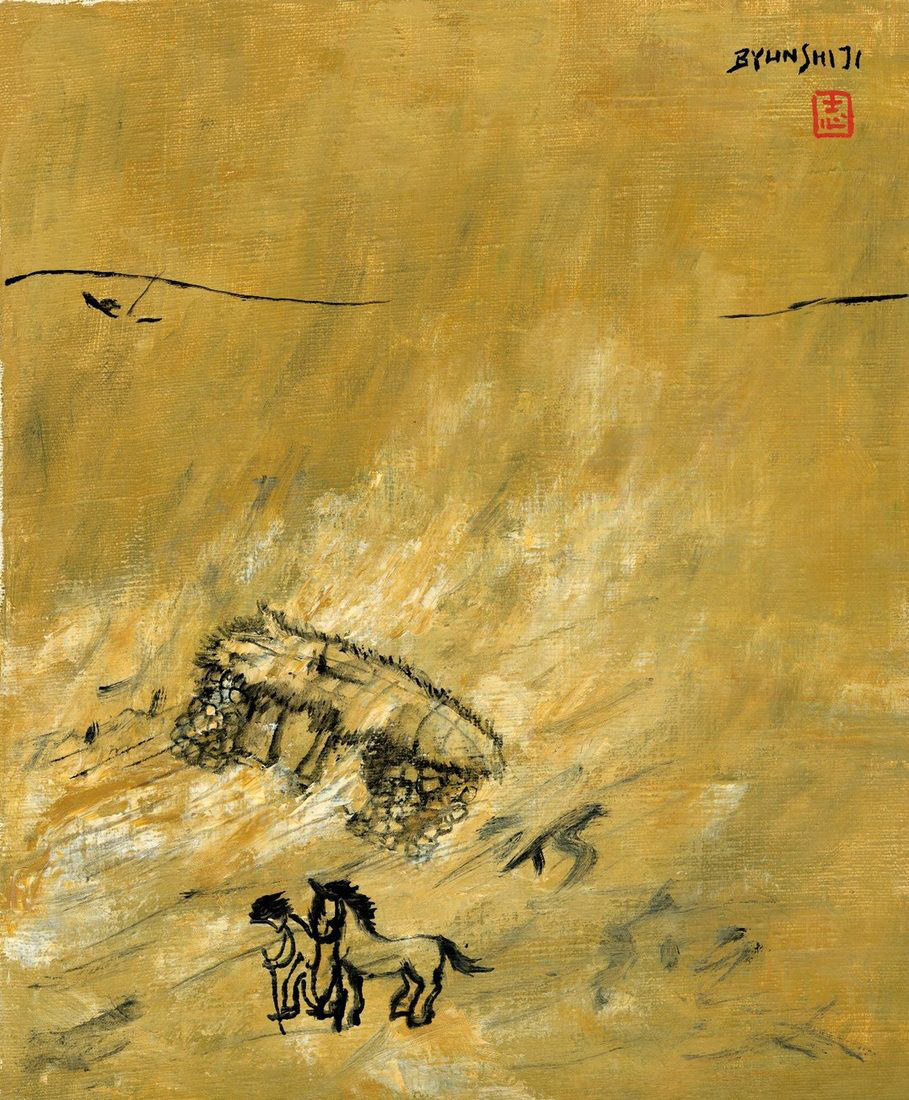
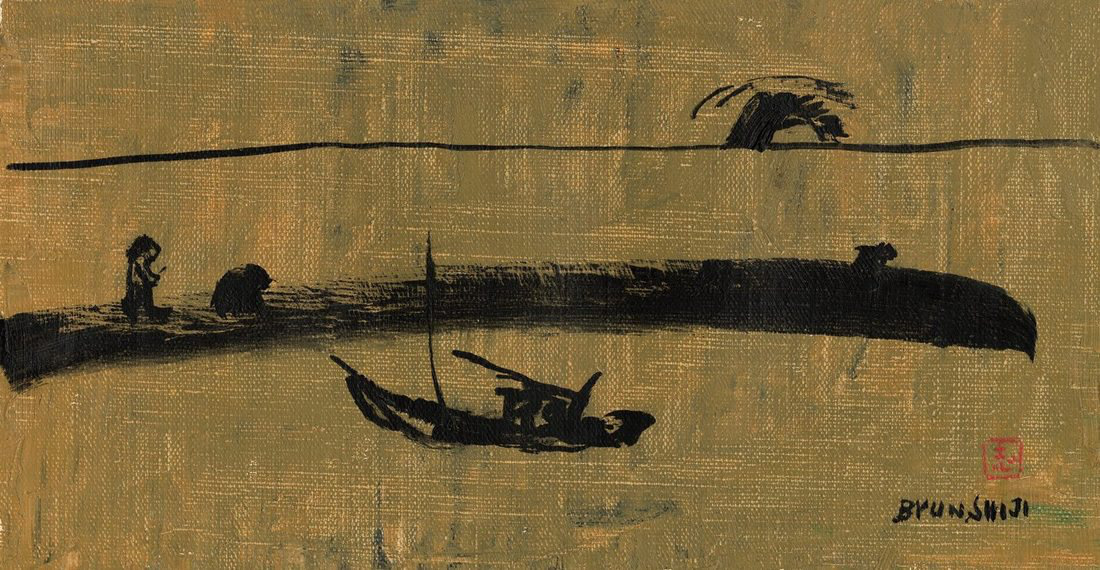
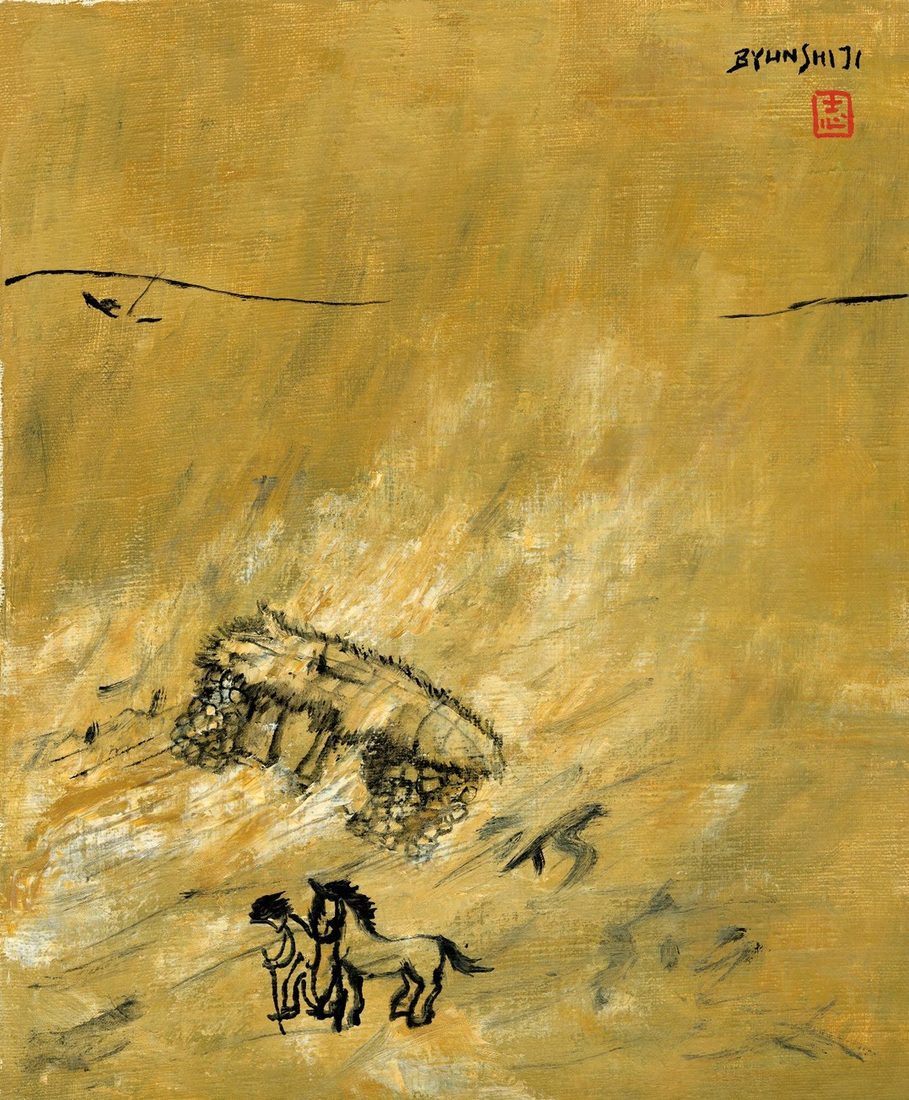
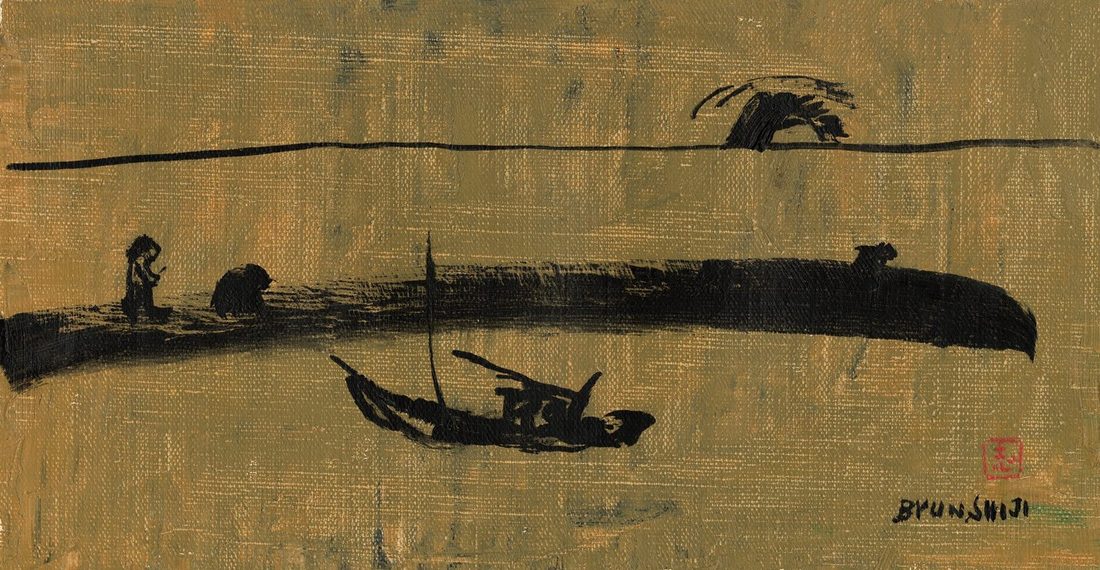
In Stormy Seas, pale marks sweep around a low house, while a person and pony stand close together below. In The Jetty, water opens between a dark strip of land and a boat. Movement appears first in one, an interval in the other. This does not mean that the two works record stages before and after one actual storm.
The supplied material dates The Jetty to 1979 and Stormy Seas to 1983. Placing the earlier quiet picture after the turbulent one does not establish it as a scene following that storm. “Before and after” here concerns time made by the viewer between pictures rather than their sequence of production.
The same stillness changes with what we have seen first. After a turbulent picture, a broad stretch of water can seem to carry an after-effect. Reverse the order, and the interval may become anticipation. Pictorial time lies not only within the image but also in the order of looking.
An Eye Attending to What Has Not Yet Happened
The boat in The Jetty does not touch the dark land. The eye crosses the lighter water between them. A small human figure occupies the shore, but the picture alone does not tell us whether the person awaits the boat or what they think. The separation nevertheless leaves room to consider arrival and waiting.
Waiting differs from a state in which nothing happens. What has not yet arrived changes the meaning of what is visible now. A breadth of water can feel long; a small figure’s posture stays in the eye. This describes the viewer’s experience before the picture more than it settles the depicted person’s psychology.
A story of awaiting a storm can be placed in that interval, but it is not the only reading. It could be a midday pause or a distance encountered after returning. A careful reading of a “before” does not announce an approaching event too loudly; it lets us stay with the present scene among several possibilities.
Contact That Remains within Movement
The person and pony in Stormy Seas are very close. Unlike the pale marks around the house, the dark strokes of their bodies gather almost into contact. That proximity prevents the picture’s movement from appearing only as an abstract swirl. It makes us consider where a body can be and its need to remain beside another.
Byun recalls seeing storms from a friend’s car and subsequently painting at home. This offers a clue to the pictures’ sense of reality. But brushwork need not be treated as a direct copy of a shock felt on location. Remembering, setting distances and choosing which forms to retain distinctly intervene between experience and canvas.
Reading the storm alongside life’s ordeals can lead us to look longer at that contact. An ordeal is not simply a stage testing one person’s will. There are neighbouring bodies, a house that cannot guarantee shelter and unsettled space around them. A painting of endurance need not be a contest over who is strongest alone.
The Limits of the Storm-Eye Metaphor
In meteorology, the eye of a tropical cyclone is relatively calm, while the surrounding eyewall carries intense wind and rain. This structure can prompt thought about the proximity of calm and turbulence. Relative calm, however, should not be redescribed as an absence of danger or an invariably complete absence of wind.
A bent back in a painting can be compared to a storm’s eye. It is not evidence of an unshaken inner life. A lowered posture may suggest fear, fatigue or reliance on another body. The metaphor becomes more careful and deeper when it leaves room for such states rather than explaining the person away.
A small form need not occupy the centre of a picture to provide a resting place for the eye. In Stormy Seas, the proximity of the two bodies below can play that role. Pictorial stillness need not reproduce meteorological calm. It can also be the compositional work of bringing the gaze briefly to rest before a mark.
Not Hastily Calling the Aftermath Purification
When speaking of calm after a storm, we should be especially wary of dressing loss as purification. What disappeared was not unworthy of surviving. Nor can what remains be said to have stayed because it was nobler. Turning a natural event into a moral judgement erases the place of lost lives and things.
If an interval in a picture suggests loss, we need not immediately fill it with recovery. An empty boat may bring to mind someone who did not return, without requiring a claim that the work records a particular death. A painting’s opening towards mourning and a documented event matter in different ways.
To consider recovery is also to consider the particular conditions of living again: a resting body, someone offering help, a place needing repair. These are not a cleanliness bestowed by the storm but things someone must attend to afterwards. Stillness may be the time of work remaining rather than a completed ending.
Stillness and Movement within One Picture
Within the turbulence of Stormy Seas lies the near-still contact of two bodies; within The Jetty’s quiet lies the movement of a gaze crossing from boat to land. Stillness and movement need not appear as two successive scenes. They can operate together, at different speeds, within one picture.
The supplied transcription of the ink-painting notes discusses a rhythm between the movement of ink and the quiet of paper. Compared with Byun’s oils, it invites attention to dark strokes and lighter areas. This does not mean that a light area in an oil painting has the same material condition as unpainted white paper.
Seeking rhythm does not mean fitting every work into an alternating schedule of storm and calm. Some pictures remain taut; some do not readily lean either way. Leaving them free not to follow one beat makes differences within recurring motifs easier to hear.
Not Closing a Life into Calm, Storm, Calm
A life arranged as quiet preparation, turbulent discovery and peaceful old age is easy to understand. That ease can make the actual paintings of each period disappear. Youth includes conflict and choice; late life still has a revising hand. Knowing the end, we readily invent a life that awaited it from the beginning.
Byun’s account of working interweaves observation, memory, waiting and revision. It is more complex than a single passage from storm to calm. His testimony that a composition could be reconsidered before the same painting prevents late life from becoming a place where every judgement had ended.
It matters to read a before and after without closing what lies between. Tension may remain after turbulence; an earlier scene may already hold old loss. When pictorial quiet is not made the painter’s final answer, a viewer can stand before it with a time of their own.
Where Sound Stops and the Eye Returns
John Cage’s 4′33″ directs performers not to sound their instruments across three movements, turning attention towards the sounds of the performance environment. A comparison with Byun’s quiet need not conclude that the two mean the same thing. It asks what, when something stops, begins to be heard or seen that had previously been passed over.
The sounds heard in a Cage performance are actual sounds in that place. Wind sensed through a painting is an association made through looking and memory. Comparison remains possible with this difference intact. When a painting feels quiet, we can ask again what we are attending to rather than simply note an absence of sound.
After Stormy Seas, the eye turns to The Jetty. The boat has not reached the shore. We look a little longer at the water between them.