Research/A Hundred Years of Wind/Ⅵ Time & Memory
Ⅵ Time & Memory · 74 / 100
The Cycle of the Seasons
Returning Seasons, Time That Does Not Return
사계(四季)의 순환
A Season in a Title, Time in a Painting
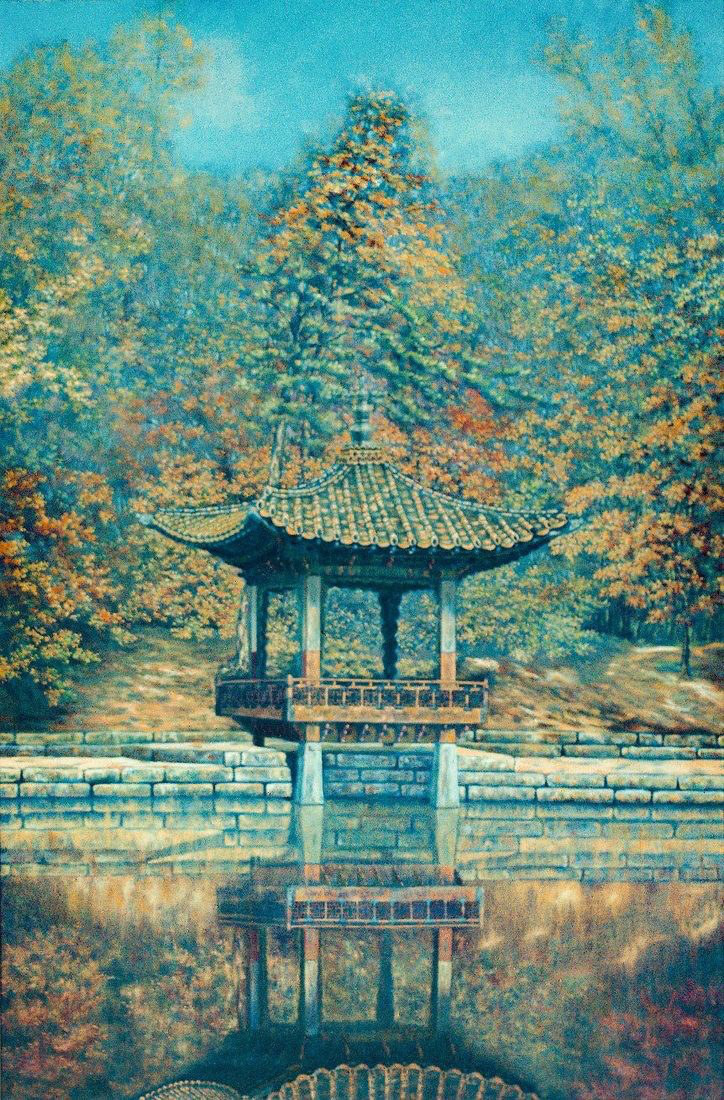
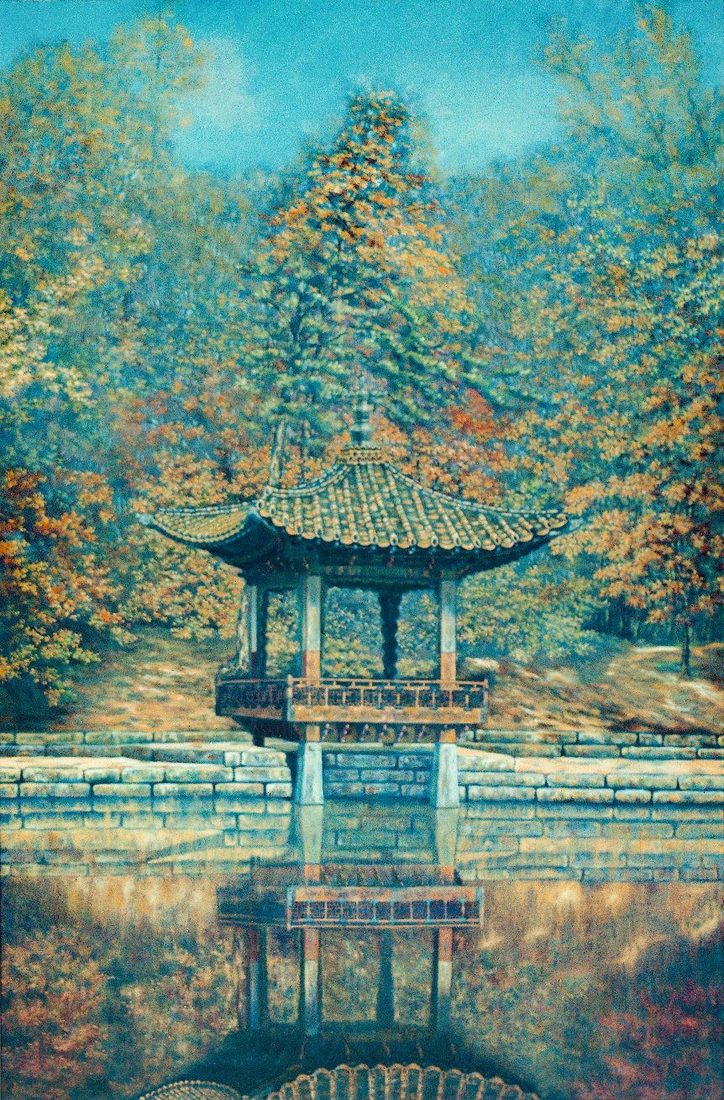
Aeryeonjeong Pavilion in Autumn contains the pavilion, its reflection and the surrounding leaves. Its title names autumn, but the picture does not end with that seasonal name. Following the regular lines of the roof, the small marks of leaves and the lower reaches of the reflection gives us time to remain within a landscape first seen at once.
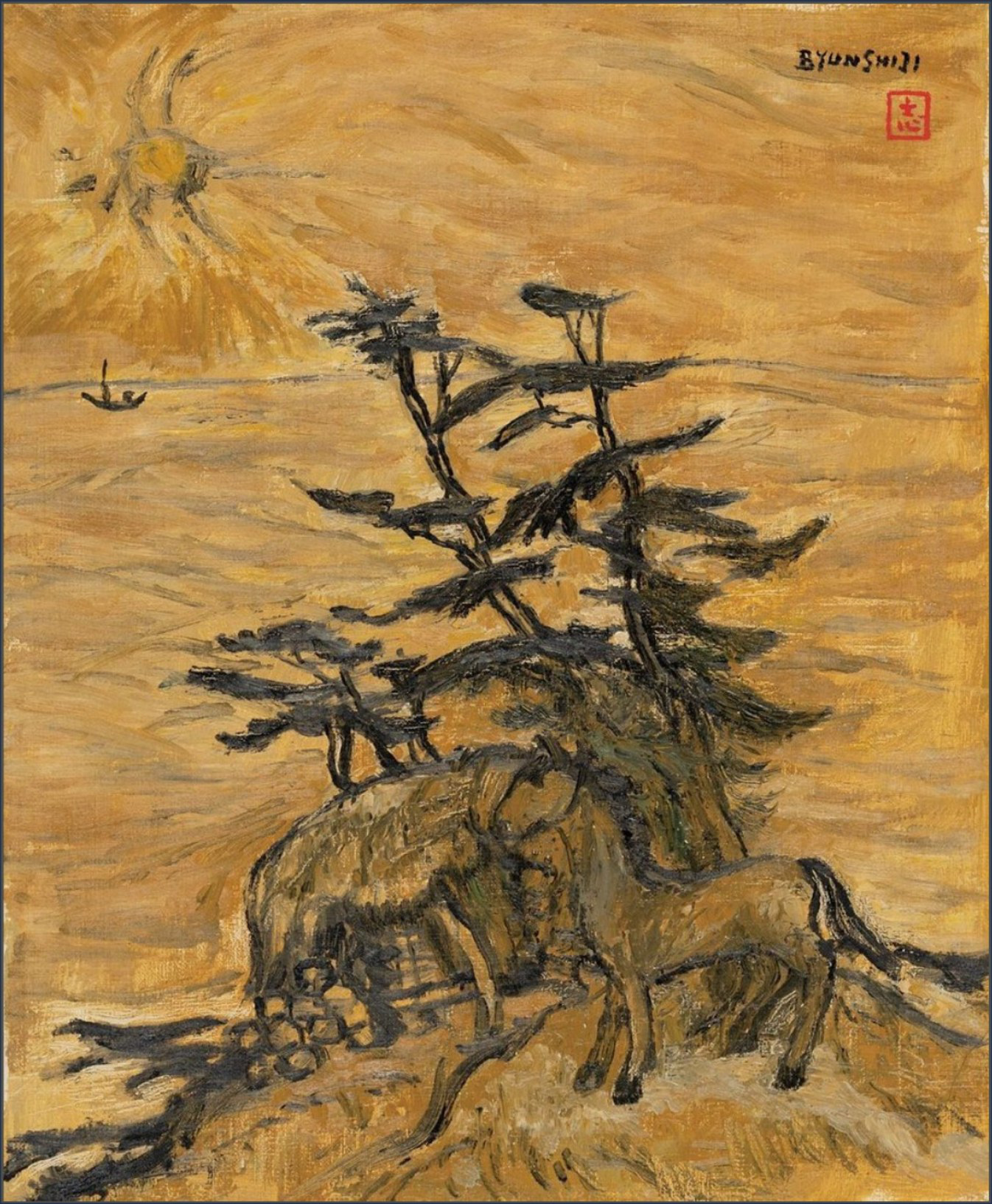
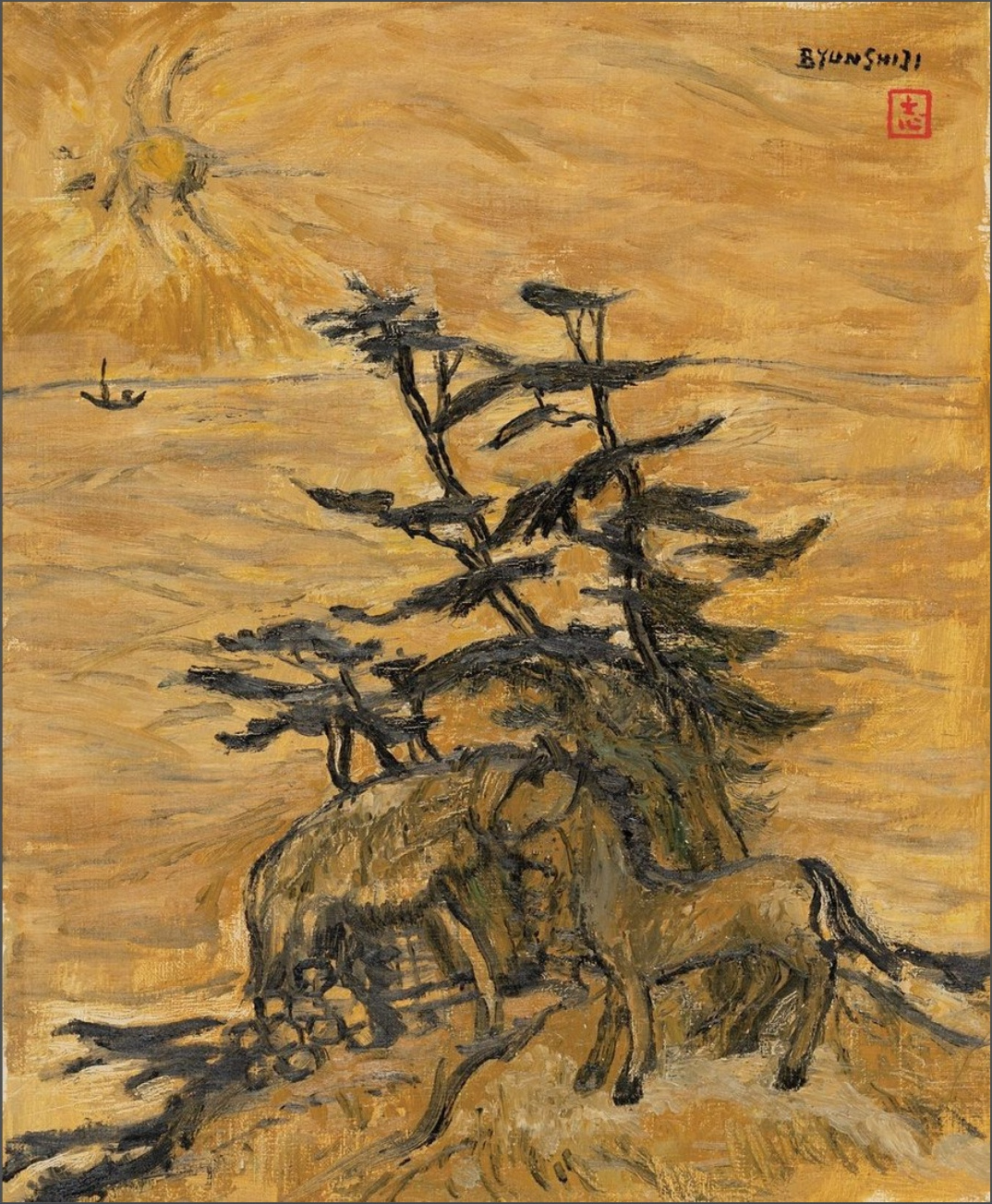
In Tropical Sun, the sun, trees, ground and a single pony occupy differing densities. The title evokes strong sunlight without supplying the temperature or exact season of the day of making. Distinguishing seasonal experience, a title’s imaginative invitation and the date of work leaves us more kinds of time to read.
This essay does not claim to have identified a four-season series. It asks how recurring natural rhythms meet a person’s unrecoverable time within a picture. A season returns; the body meeting it, and the people beside that body, may not remain the same.
The Calendar’s Circle and the Difference between Dates
The same months return in a calendar. But a recurring name differs from reversible time. Last autumn and this autumn hold the same season and different dates together. There is no need immediately to divide these into Eastern and Western conceptions of time. Both operate within a single person’s daily life.
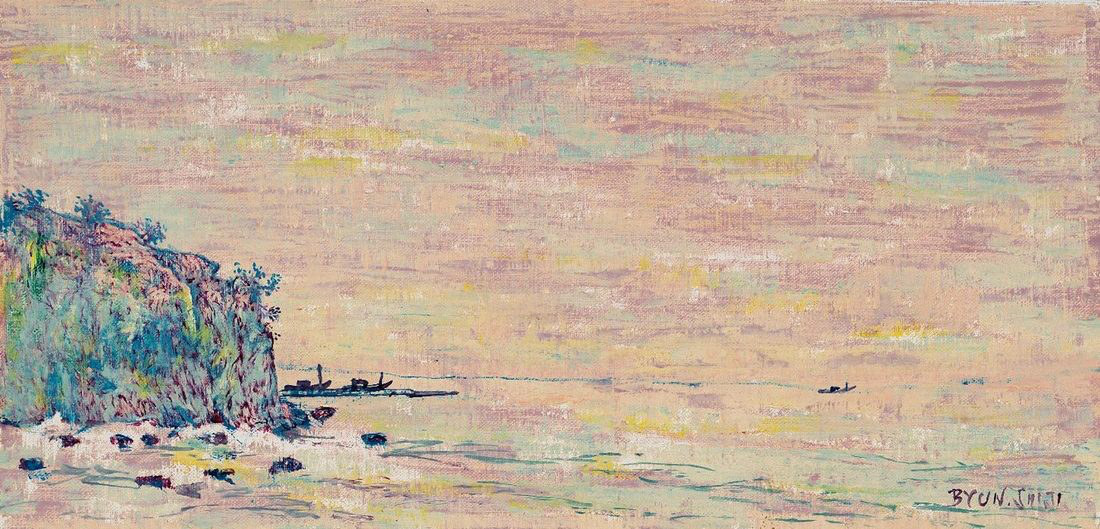
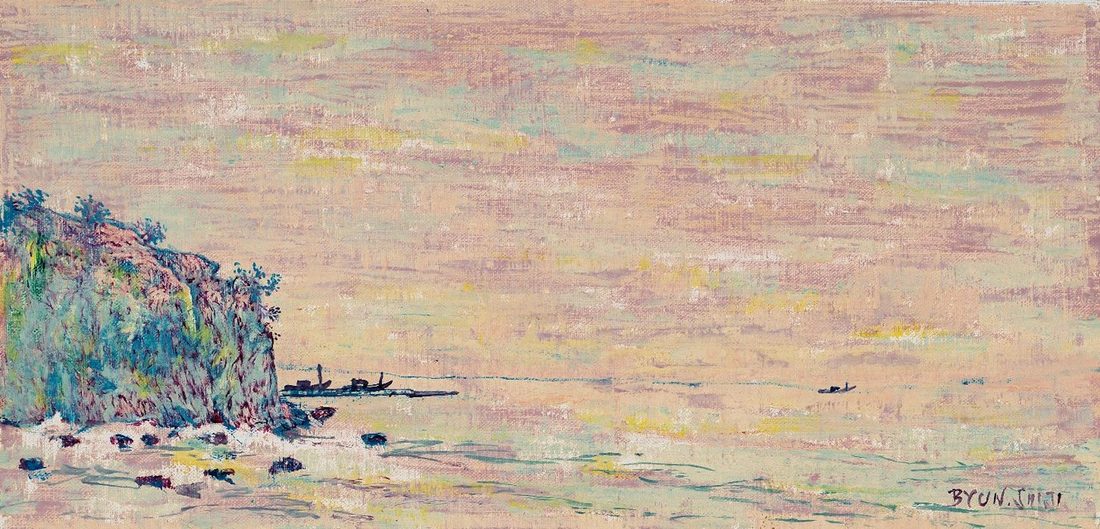
Sunset places the day’s end in its title. We see water carrying pink and blue-tinged passages, a darker shore to the left and small boats. Another day may follow, but the water now seen need not return unchanged. Recurring sunsets and the sunset retained in this one painting are not the same unit of time.
A painting’s date is a small marker of that difference. Yet one year does not explain all its temporalities. The year of painting may differ from the remembered scene; there may also have been later returns to the surface. Valuing a date differs from confining a picture to one square of a calendar.
More than Seasons Return
Looking again at a tree can bring back the tree seen before. Its present and remembered forms overlap without necessarily coinciding. There may be fewer leaves or a differently placed shadow. Long familiarity offers opportunities to notice differences; it does not automatically make a person more profound.
Byun says that encountering a surviving fragment of an older landscape, such as an aged tree, recalls former scenes. His account of a landscape of the mind brings present observation together with memory of what has disappeared. A returning season can be approached through such an encounter: one visible part calling back many days already gone.
Memory here is not a transparent window restoring the landscape unchanged. The past reappears at a place selected by a present eye. Some things are distinct, others blurred. Rather than treating every difference as a defect, we can see it as a way the present relates to the past. Painting gives that relation form again.
Not Reading Eternal Recurrence as an Order to Endure
In section 341 of The Gay Science, Nietzsche asks how one would receive the return of one’s life, joys and pains included, in the same sequence. This is a thought experiment testing an attitude to life, not a scientific account of seasons. Recurring motifs do not by themselves establish that a painter practised this philosophy.
Placed beside a painting, the question makes us consider the difficulty of repetition. Looking again brings both familiarity’s reassurance and the danger of confinement within it. Freedom to paint the same thing should coexist with freedom to attempt something else. Having painted yesterday makes today’s painting neither unnecessary nor compulsory.
Above all, we should not command another person to love suffering again. Someone may await a returning season while refusing to repeat what happened before. If a painting affirms life, it may do so not by endorsing every ordeal but by leaving room for other relations after it.
Beside Bergson’s Melody
In Time and Free Will, Bergson turns to the experience of melody when discussing duration irreducible to a sequence of isolated units. As a later sound is heard, the earlier one has not simply vanished. This offers one comparative approach to meeting the same season again, without making the painting proof of his theory.
After looking at the pavilion in Aeryeonjeong Pavilion in Autumn, the eye retains something of its roof when turning to the reflection below. The shape in the water is read with that memory. Even within one picture, earlier looking changes later looking. An account of painting as entirely given in one instant is therefore insufficient.
Yet we cannot promise that past time always accumulates into greater richness. Forgetting and fading occur too. A painting does not return every loss. It can, however, provide a place where a remaining small sensation meets a present gaze. Looking again includes both recovery and change.
The Rhythms of Living and Working
A season can change more than the visible landscape. It may alter what people prepare for and wait for. Before calling all of this sacred ritual, we should notice the repetitions needed to sustain daily life. Doing the same thing again often answers a particular need before it embodies a mystery.
Painting also has rhythms other than the weather’s. Byun explains that another intervention follows a degree of drying, and describes waiting for concentration to return. Seasonal change, the drying of paint and bodily condition did not necessarily move to one beat. Several clocks inhabited the studio together.
We cannot therefore prescribe a sequence in which summer necessarily produced storm paintings and quiet days produced quiet ones. A remembered storm can be painted later. The interval between actual and depicted weather is not an error but room in which painting can happen. Because experience is not transferred immediately, selection and reconsideration have time to occur.
A Place from Which to Think of the Next Season
A present season holds more than what has passed. It also includes anticipation of what comes next. That time enters the viewer’s encounter too. One person may recall an earlier autumn through the leaves; another may think of the approaching season. The same picture does not require the same recollection.
The small boats in Sunset do not spell out where they are going. An evening title does not mean that every task of the day is finished. We can imagine further sailing or a return home, but the picture does not settle that story. Even a name suggesting an ending contains time still open.
Nor must this openness be called hope without qualification. Waiting may be anxious; another season may not be assured. Its significance lies in not making the present a sealed box. One boat retained in a painting places time not yet narrated beside the viewer.
Time Can Continue without Ascending
Seasonal time may be compared to a spiral. But a spiral need not always ascend. Backward-looking and forward-reaching positions can diverge. Dates alone cannot award each successive painting greater depth or excellence. Becoming different and becoming better must be considered separately.
To look at several paintings by Byun together is to attend to such differences. The reflection in Aeryeonjeong Pavilion in Autumn, the trees and pony in Tropical Sun, and Sunset’s open water do not fit one seasonal chart. Yet each creates time for sustained looking. Painting’s breadth may lie in allowing different times to stand beside one another.
The pavilion is reflected in the water. The eye moves down from the leaves above. It sees the same roof for a second time.