Research/A Hundred Years of Wind/Ⅴ Life & Place
Ⅴ Life & Place · 61 / 100
The Atelier and the World
Encountering the World Outside, Painting It Again Inside
아틀리에와 세계
Seen Outside, Painted Inside
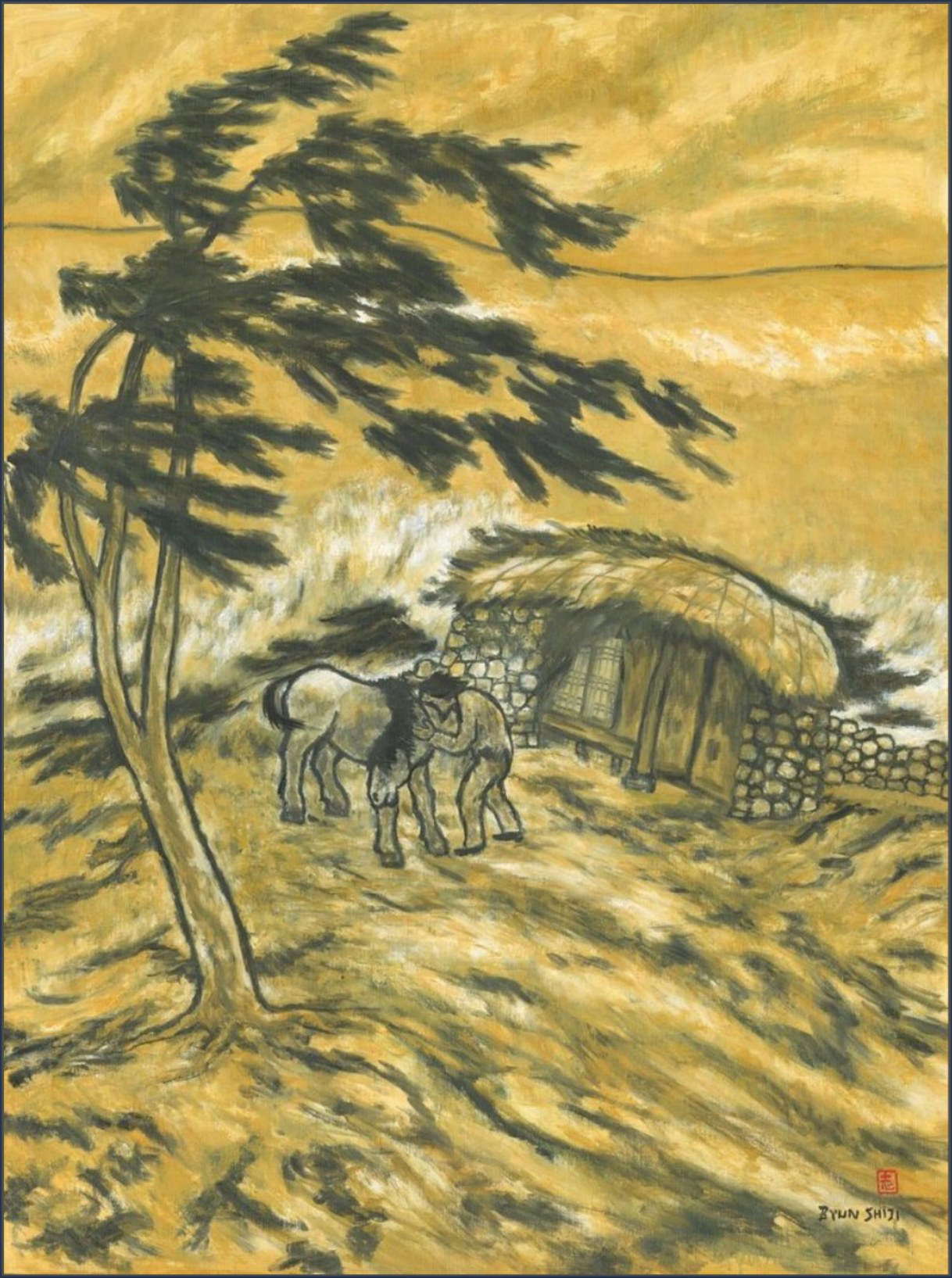
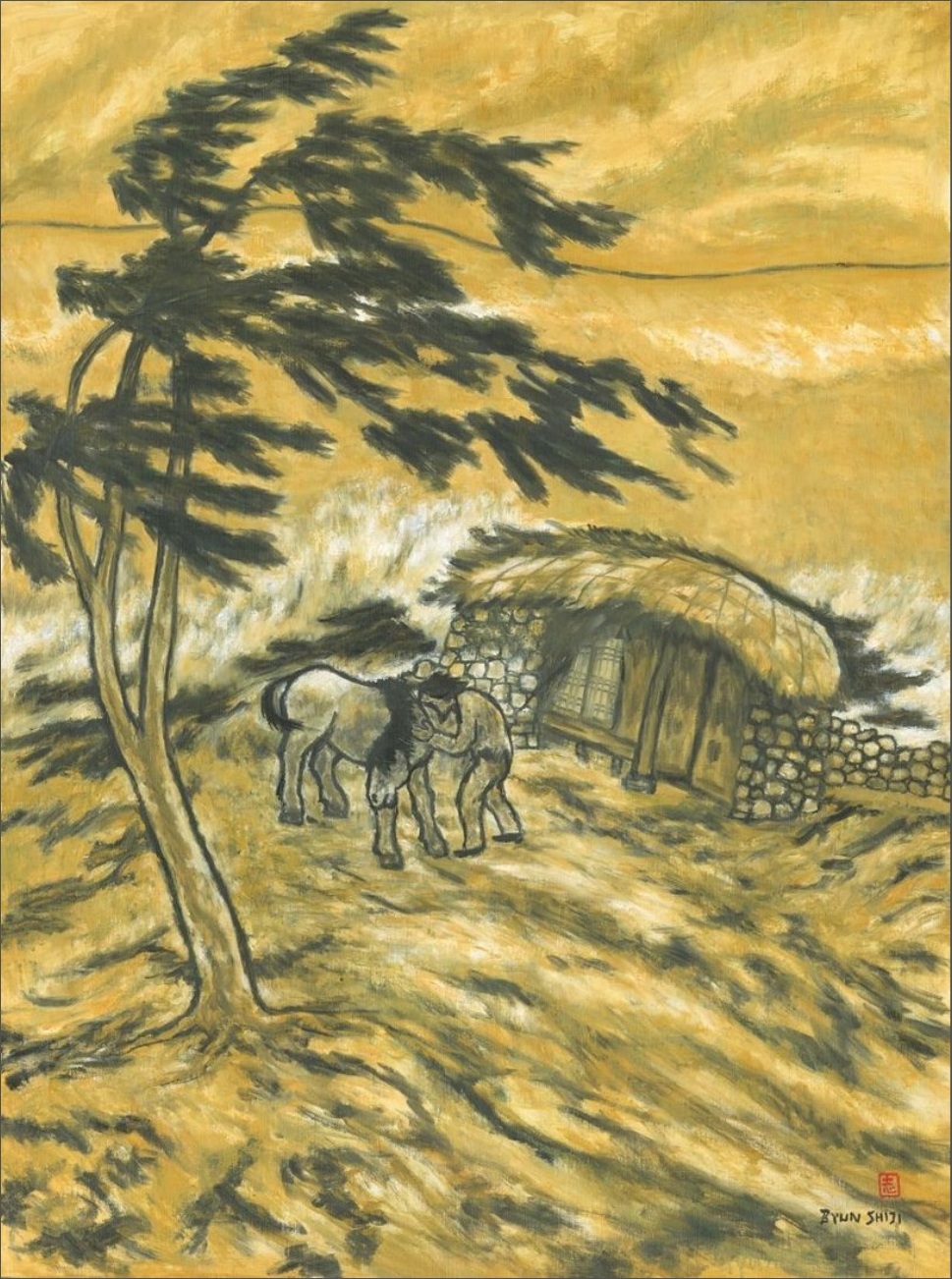
A storm painting need not be made in the storm. Byun recalled travelling to the coast in a friend’s car to watch the rough sea, then painting at home. A painting could begin after the waves were no longer before his eyes. The studio stands between the time of looking outside and the time of painting inside.
In Sea in a Storm, branches and strokes across the ground surround the person and the horse. Following the movement of the picture, one may feel the pressure of wind. This sensation is not wind caught unchanged as it entered a window. It is made anew through the direction and overlap of marks and the small space occupied by the bodies.
The studio is not the opposite of the outside world, but neither is it the same place. It is where someone who has returned from looking selects, sets down and reconsiders what is remembered. That interval can transform experience into painting rather than erase it.
A History Larger Than One Room
It is tempting to imagine a single house by the sea as the lifelong setting of Byun’s studio. His testimony instead recalls living in Jeju City while also maintaining an apartment studio in Seogwipo and travelling between them. The shapes of branches seen along the road remained part of those journeys.
The history of a studio cannot therefore end with one address. Rooms for living, rooms for painting and routes of travel touch one another. Where a particular painting began and ended requires work-specific documentation. Merging several places into the legend of a single room erases the actual time spent between them.
Fūdo—the lived conditions of place—does not mean only a fixed view outside a window. It can include a repeatedly travelled road and the changing views encountered there. The painter inside the studio may appear still; the experiences informing the painting have not necessarily stayed in one place.
A Painting of a Studio
Vermeer’s The Art of Painting contains a painter seen from behind, a model and a map on the wall. The Kunsthistorisches Museum identifies the model as Clio, the muse of history, and relates the map to the history of the Netherlands. The objects in the room point beyond studio equipment towards a world that painting remembers and transmits.
There is no need to read this picture only as a Western room that controls the world. The map hangs on a wall, yet the history it invokes exceeds the room. Curtain and chair also establish a place for the viewer. Even within the representation of an enclosed interior, relations with the outside continue.
The comparison with Byun then asks a different question. It is not which painter was more open to the world, but how room and world meet in their respective paintings. One depicts the scene of work; the other’s seascapes ask how experience gathered outside a studio can be composed within it.
Waiting Between Hand and Paint
The studio also contains times when the brush does not move. Byun said that he returned to oil paint after it had dried to a degree. His thinking could change while he looked. The testimony records a process of withdrawing from one canvas for a while and returning to it later.
It is difficult to call this waiting a gap in creation. While the brush is still, the relation between colour already laid down and a line yet to come may change. The hand cannot simply abolish the time of paint. The studio’s rhythm is made jointly by the painter’s decisions and the conditions of the material.
The relation between body and world need not be described here as a grand fusion. A hand holding a brush meets the surface, withdraws and meets it again. Making a painting involves both the movement forward and the judgement to leave something untouched.
The Distance Kept by a Threshold
A studio door admits the world and also closes it out for a while. Work needs a place protected from rain and dust. To carry the sensations of Jeju does not mean continually admitting sea air. Experience of the outside can be painted within a sheltered interior.
In the testimony, the Biwon paintings are associated with working on site, while the Jeju storm paintings are associated with observation followed by painting at home. The two methods form no hierarchy. The interval between observation and execution changes with subject and circumstance. Working indoors does not in itself make the experience less direct.
A threshold does more than separate. It allows a choice about what to admit and what to leave outside for a while. Through that distinction, the actual sea becomes the sea of the painting. Between the window and the canvas, the painter’s decisions remain.
More Than Paintings Accumulate
A group of completed works may seem to reveal the time of their making. Yet a count cannot explain that time. Days spent with one canvas and days of repeated beginnings are indistinguishable within a single number. The history of a studio is more intricate than its output.
Byun also described losing an effect that had worked while continuing to paint in the hope of something better. This is not a rule that less painting is always better. It can be read as an emphasis on recognising what has emerged and judging when to stop.
What accumulates in a studio is not only objects. Questions that need another look accumulate too. The same house may raise a question about its door on one occasion and about the space between house and person on another. Repetition can carry that question into the next painting.
Showing the Studio
When encountering an artist’s studio in a museum, one should distinguish an original room, relocated objects and a reconstruction made for display. A visit record for Gidang describes a reconstruction of Byun’s studio. Such a room helps us think about work; it is not identical to the original room with time suspended.
A reconstruction gains value when its grounds are known. Identifying when a chair or easel was used, or the period recorded in a photograph, allows viewers to see both the life and the display’s construction. The provenance of what remains lasts longer than a plausible story invented to fill its gaps.
The passage from studio to museum is not simply an enlargement of a private room. A tool once used alone begins to receive other people’s questions. Objects change places, and the people who stand before them change as well.
Before the Painting Again
Knowing a studio may change how a painting looks. The circumstances of the room do not, however, determine all its meanings. Where a work was made matters. What passed from that place into the picture must be asked again before the painting itself.
The tree and house, person and horse in Sea in a Storm are not studio furnishings. On the canvas they have acquired their own sizes and directions. Their arrangement returns us to an experience of the coast. A painting made inside a room grows larger than the room.
The horse and the person are in front of the house. The branches extend far to one side. The eye follows their tips beyond the edge of the picture.