Research/A Hundred Years of Wind/Ⅳ Technique & Medium
Ⅳ Technique & Medium · 49 / 100
The Language of Texture
Touch on Canvas
질감의 언어
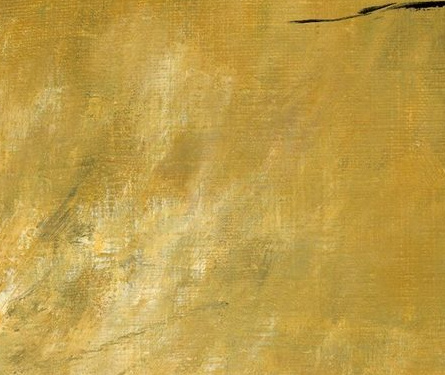
Where the Eye Briefly Catches
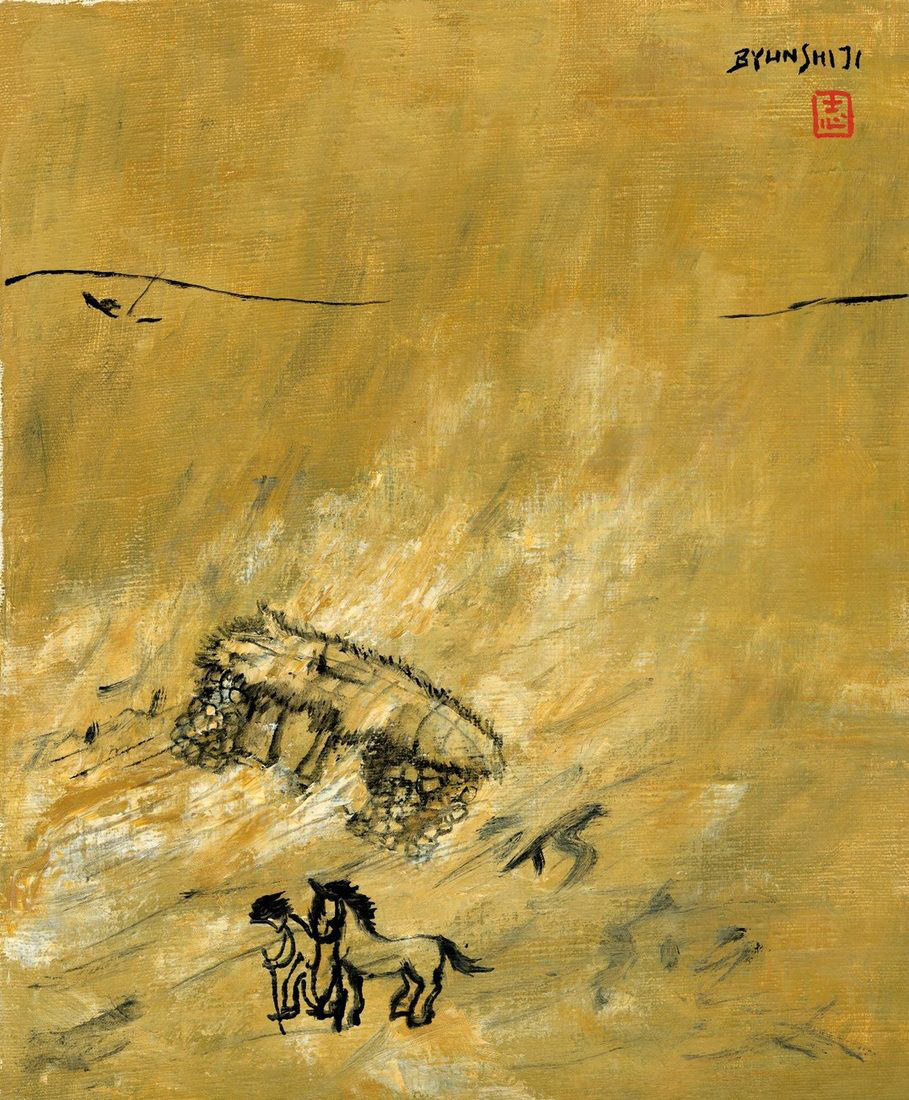
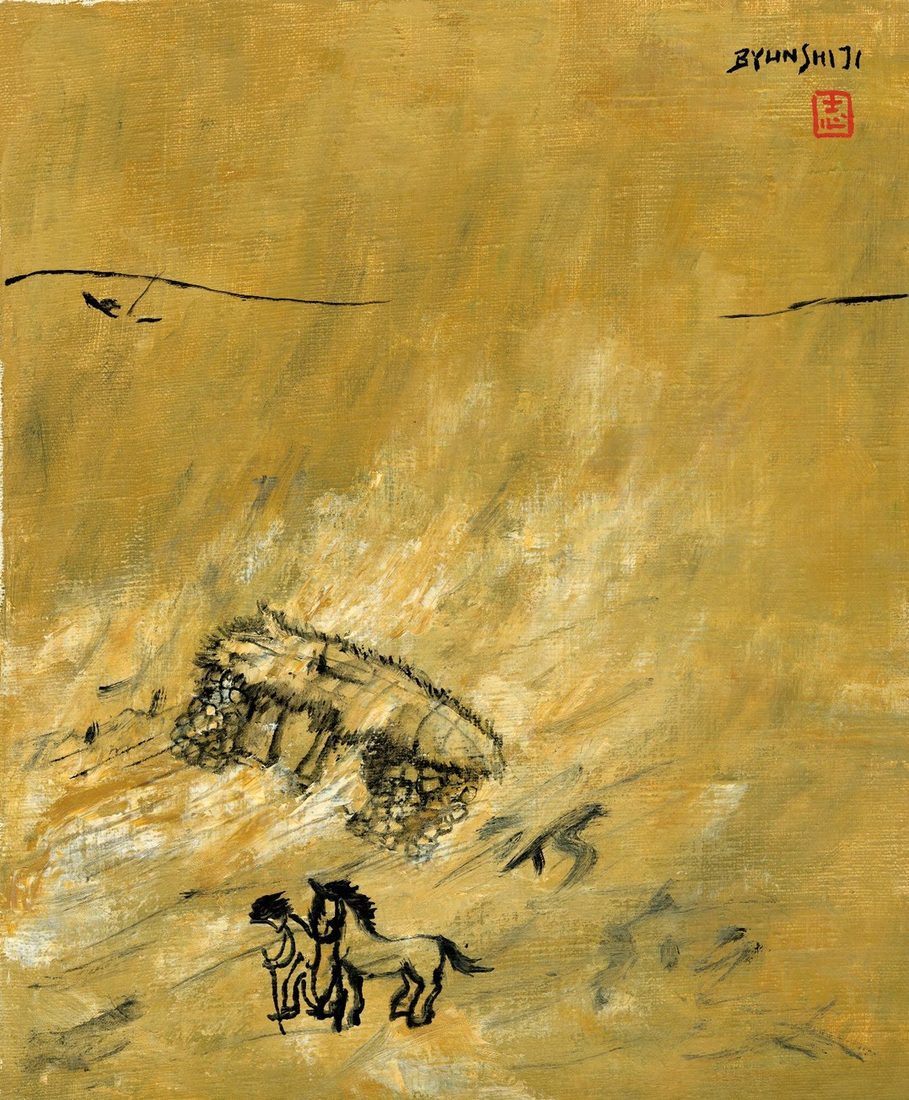
Around the house in Stormy Seas (1983), pale marks pass diagonally. A short dark stroke lies beside a broad, faint passage, with the ground seeming to show between them. The eye does not glide through in one movement. It catches on light, then shifts towards darkness. Texture begins in these small pauses of sight too.
A rough-looking passage may recall a sensation in the fingertips: the rustle of dry grass held in the hand, or a stone’s uneven surface. We have not touched the painting. Visible marks have called up an earlier experience of touch. Sight and touch are not the same sense, but one can awaken the memory of the other.
To call a painting rough can mean two things: that its surface has physical relief, or that it gives a rough visual impression. The two may overlap but do not always coincide. Writing from a photograph begins with the second. Describing appearances carefully is not the same as determining materials.
Brushwork Remains Within Precision
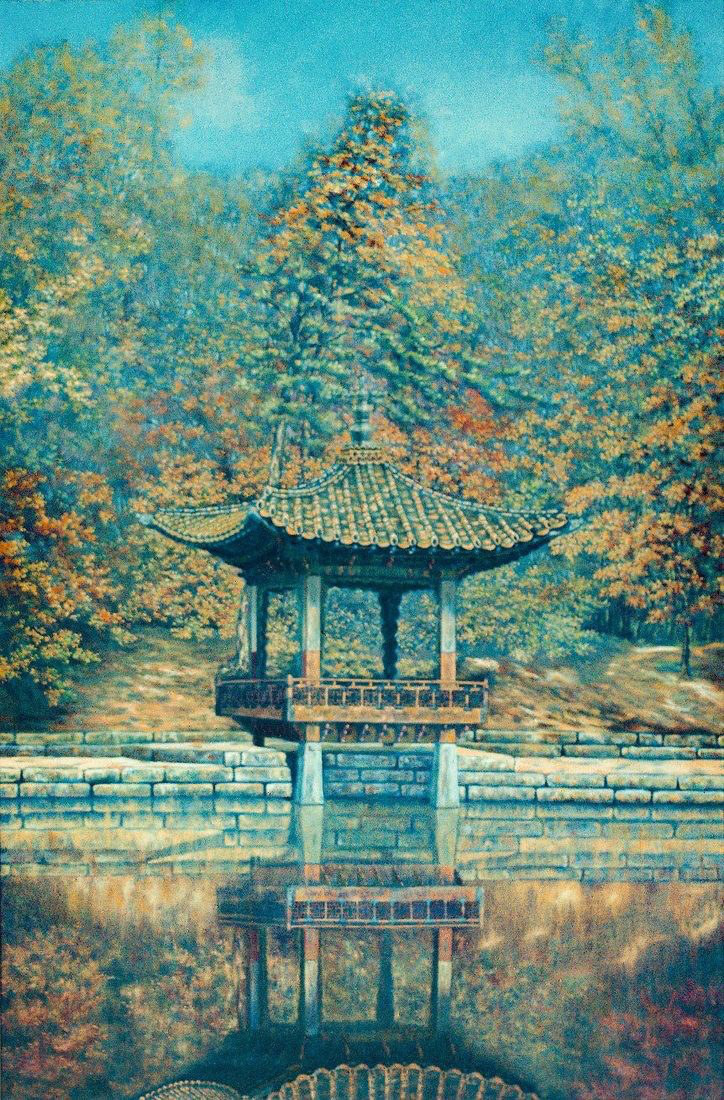
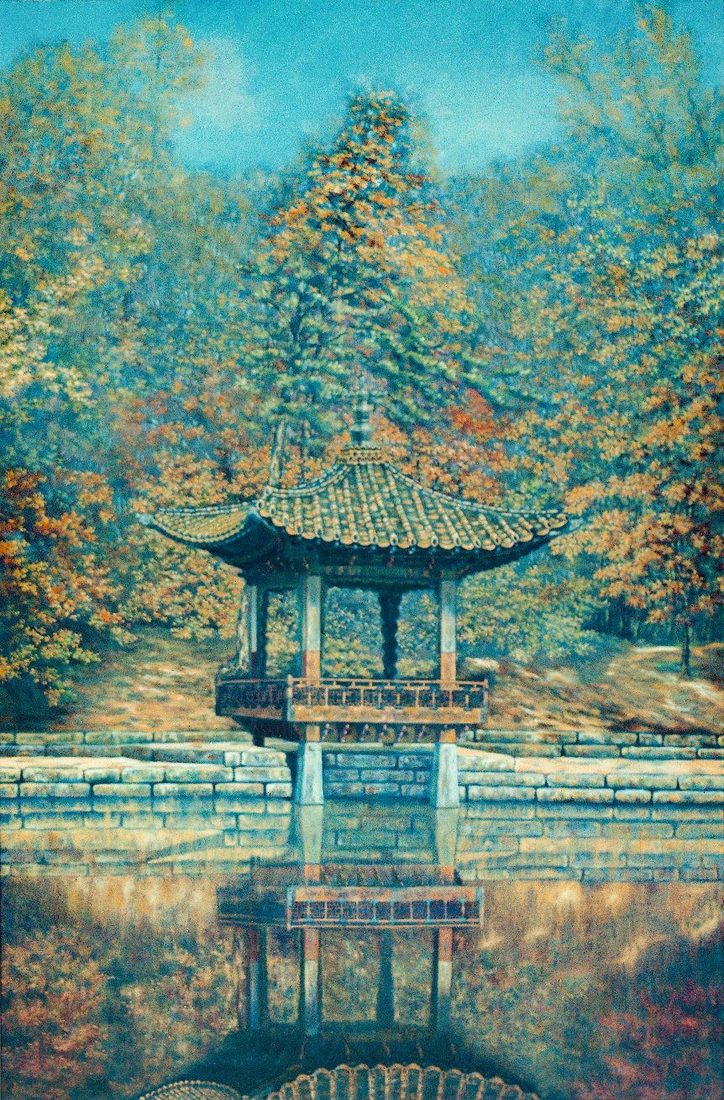
The roof and pillars in Aeryeonjeong Pavilion in Autumn (1965) are relatively distinct. Foliage and reflections, however, are built from small differences of colour. Calling the work merely a smooth record misses the brush marks active within its precise structure. Detail need not mean an absence of brushwork; it can mean brushwork assembled differently.
In Stormy Seas, marks draw attention more strongly than architectural detail. The pale flow around the house and short dark strokes disturb the atmosphere together. The comparison is not between an earlier, falsely smooth work and a later, truthfully rough one. It concerns a change in how, and how prominently, marks organise the picture.
This change cannot be reduced to a simple replacement of materials. Within oil painting, the painter can vary where marks gather densely and where they remain sparse. In handling paint, the hand also handles the speed of the gaze. A different speed can make a canvas of the same size arrive with a different weight.
What “Dry Brush” Can Tell Us
In general accounts of technique, dry brushing uses a dry brush carrying little paint to make sparse or feathery marks. The term first describes the brush and its application. It does not mean that all oil has vanished from oil paint. A visible dry-brush effect should not be equated directly with the paint’s chemical composition.
In the detail from Stormy Seas, a fine ground pattern is visible within pale marks, next to a comparatively even field of colour. Different densities meet. Describing this does not require an assertion that earth or sand was mixed into the paint. The visible surface already suggests differences in the manner of contact.
A broken-looking mark does not prove that the painter’s hand stopped there. Continuous movement can leave a sparse trace. Conversely, an apparently continuous line may result from repeated work. The eye follows traces of action while distinguishing the visible result from a reconstructed account of its making.
Waiting Also Makes a Surface
In his oral history, Byun Shi-Ji describes returning to oil paint after it has dried to some degree. He speaks of preparing a ground and composition, waiting and sometimes beginning a different arrangement when his thinking changes. An apparently fluent finished mark need not have been made in one uninterrupted burst. A surface may hold time when the hand moved and time when it did not.
He also recalls painting, waiting, returning and scraping back when things did not work. This account does not explain every mark in a particular painting. It does change a view of texture as merely the trace of a vigorous instant. Reducing what had already been laid down belonged to the work as much as depositing paint.
Resistance at the surface is therefore not only physical friction. It can also check the desire to intervene further. His account of losing a valued effect while trying to improve it shows the difficulty of this judgement. Texture contains not only traces of painting but places where further painting has been withheld.
Resembling Earth Is Not Containing Earth
A sparse surface in dried-grass colour may recall dry earth. Yet resemblance to earth does not establish that earth was mixed into it. The first statement is a metaphor of perception; the second is a claim about materials. Different kinds of statement require different kinds of evidence.
The material examined here does not justify reporting the addition of earth and sand as established fact. Without material records or examination of the original, such an account could misattribute an effect made with brush and paint to actual soil. Writing that seeks proximity to material must preserve this distinction carefully.
Preserving the distinction does not weaken the sense of fūdo. Making paint evoke the sparse textures of things dried by wind is an achievement in itself. Jeju need not be physically transferred as material for its presence to be felt. Recreating a place’s sensations in another material is part of the work of painting.
Memories Returning to the Fingertips
The phrase dried-grass colour carries touch as well as hue. It may evoke crumbling lightness, a faded surface and a sparseness that seems ready to scatter when released. The metaphor does not designate a square on a colour chart. It suggests how light, drying and time can remain on a surface.
Some readers may think of traditional floor paper or scorched rice. Readers without those memories need not be required to make the same association. Rough cloth or sun-bleached wood may come to mind instead. A metaphor is a bridge between sensations, not a threshold testing whether someone possesses the required memories of home.
These memories, too, must return to the painting. The dry earth in my memory is not identical to its marks. Stormy Seas contains comparatively even passages and thin, quiet colour between rougher traces. Texture deepens not as one sensation repeated everywhere, but through different sensations placed close together.
What a Reproduction Shows and Leaves Unseen
Getty conservators explain that light directed at a low angle can make a painting’s surface relief more apparent. Changing illumination reveals the same surface differently. An ordinary plate does not show every aspect of actual thickness or gloss. A record of texture also needs a record of the conditions of photography.
The detail plate included here is for inspecting position and the density of marks. A grid or small fleck visible in enlargement is not immediately identified as canvas structure, a crack or pigment particles. Such judgements require original resolution, photographic information and, where necessary, examination of the physical surface. Seeing larger is not the same as knowing more.
This limit does not make the reproduction useless. Moving between whole and detail helps us notice where the eye pauses. We simply do not convert that pause into certainty about materials. The closest form of respect for a work’s surface may be to look sufficiently and seek the evidence required, rather than to touch it.
Roughness Does Not Guarantee Truth
We do not need a rule that rough pictures are truthful and smooth ones false. A refined surface may contain prolonged attention; a rough one may merely repeat a familiar effect. The value of texture is not decided by a sensation alone. It depends on how the surface changes distance, weight and light within the painting.
Byun Shi-Ji’s texture gains force within the particular relations he establishes. Pale marks beside the house flow close to the bodies, while dark lines hold that flow. The sea is both something represented and a surface the eye must traverse. We cannot finish with a single view of the landscape; we return to the place where that landscape has been made.
The ground appears where one pale mark thins away. A dark stroke remains beside it. The eye rests briefly between them.