Research/A Hundred Years of Wind/Ⅲ Animals & Life
Ⅲ Animals & Life · 40 / 100
The Ontology of a Tuft of Grass
A Small Form and the World That Supports It
풀 한 포기의 존재론
Attention Comes Down to the Ground
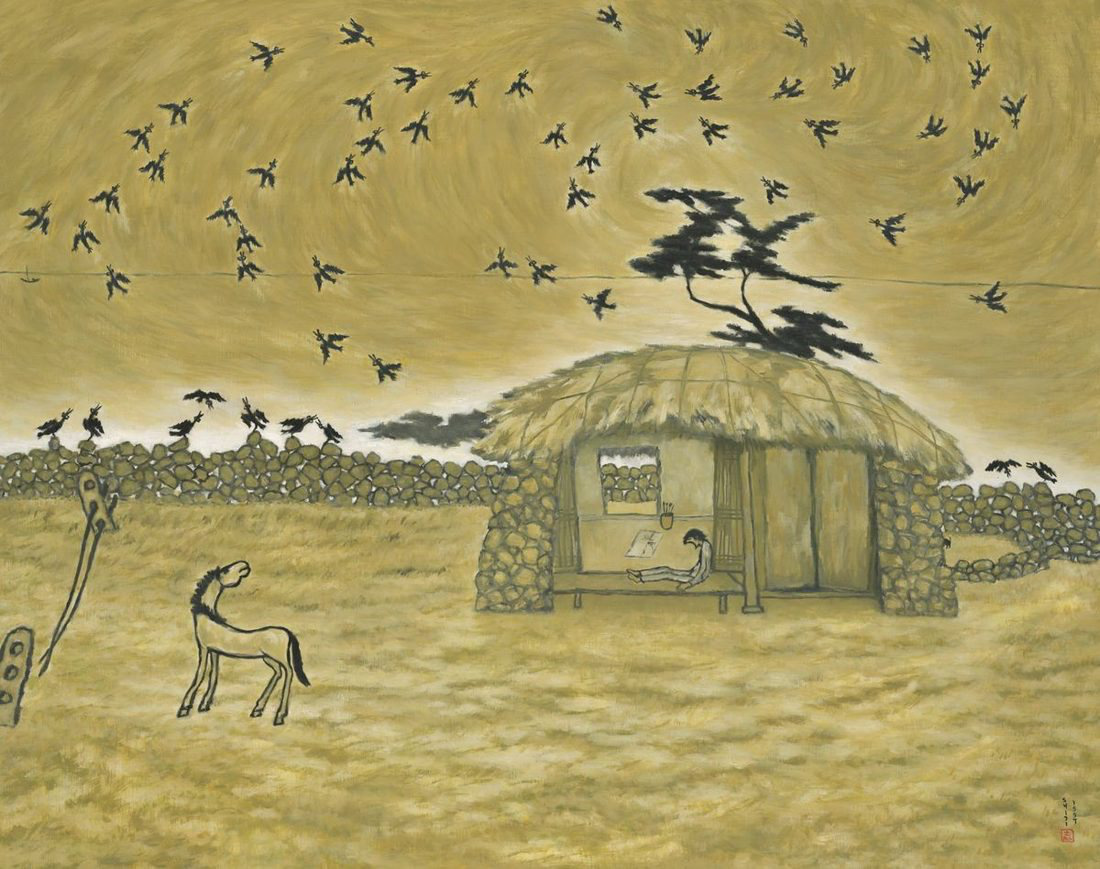
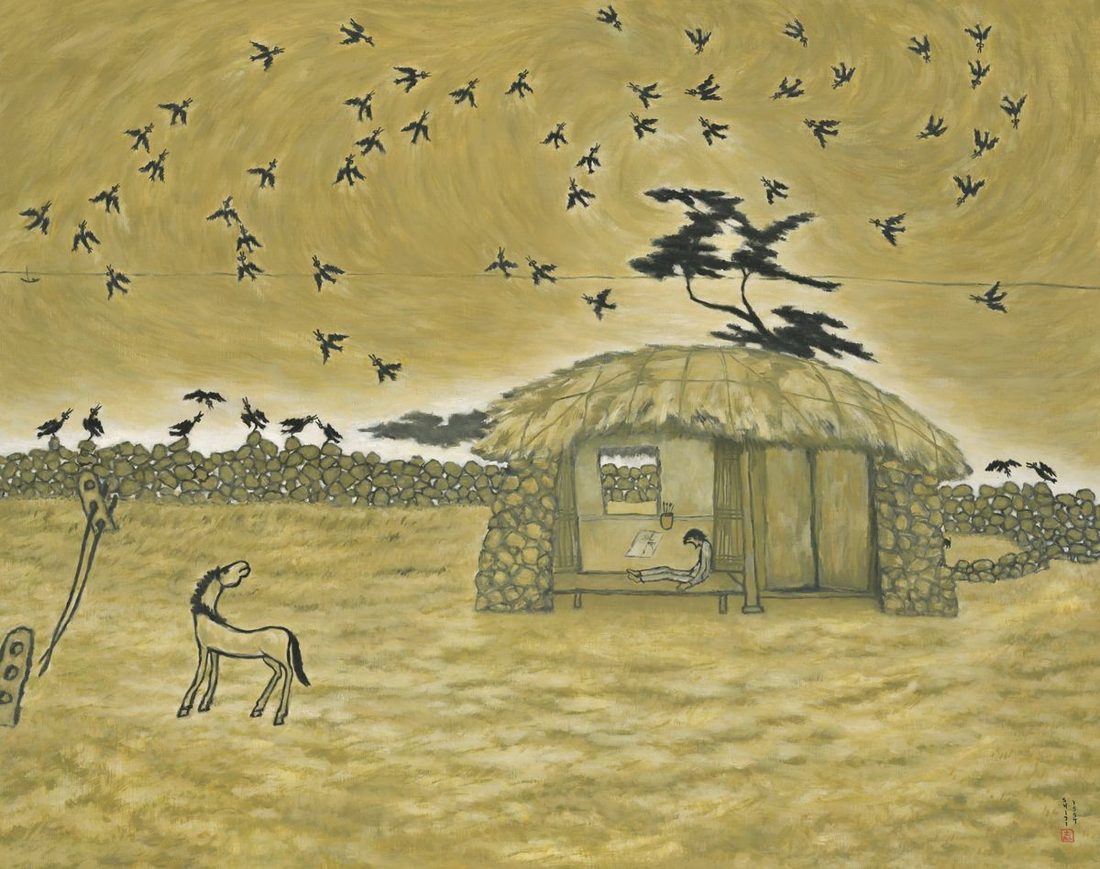
After lingering over the birds in Wild Dance (1997), lowering our gaze reveals short marks across a broad, yard-like area of earth. Unlike a large bird or house, they are not immediately easy to name. They approach us as ground texture, or as low grass-like traces. Rather than identifying a particular plant, this chapter asks how a surface underfoot comes to be read as a place of life.
A tuft of grass is not the same as a single blade. It suggests a small body of growth gathered in one place, rather than one leaf alone. The question moves from an isolated colour to the place of a being that bears it. We ask not only what is visible, but what it rests upon.
Yet every short mark need not be given the name grass. A painter can make ground felt without listing individual plants. Brief traces alter a broad surface before they acquire names. Attention to the small begins when we stop passing over that surface as a merely empty background.
What Supports a Tuft
Thinking about grass draws attention below the visible leaves as well. It recalls ground, water, light and other life nearby. We need not say that one tuft physically contains the universe. It is enough to consider that a small being which appears alone lives through several conditions and relationships.
A painted form, too, is not read in isolation. A dark stone nearby may make a slender mark feel lighter; a broad open area may make a small trace more distinct. Meaning is not always completed inside a form and then released outward. Differences from surrounding things participate in how it is read.
Reading fūdo as a condition of such relationships prevents grass from remaining a decorative touch of local colour. It becomes a form that changes the feel of earth among sea, house and animal. Small scale need not mean a small role. Establishing that role, however, does not require a claim that grass appears in every painting.
The Question of What Grass Is
In Section 6 of Whitman’s “Song of Myself”, a child asks what grass is. Rather than give one immediate answer, the speaker moves through several guesses. In Section 31, a leaf of grass is regarded as no less than the work of the stars. The small acquires its own weight of attention instead of waiting to be explained by the large.
Placing the poem beside Byun Shi-Ji’s painting need not turn both into evidence for one philosophy. A more useful affinity is the renewal of a question before something passed over as already familiar. Knowing the name grass does not mean that we have seen it fully. A small mark, too, is not exhausted by a single recognition.
Allowing several guesses differs from treating every interpretation as equally grounded. A poem’s language and a painting’s form each provide reasons for a reading. Grass may feel like hope. Yet lingering over weathered light and broken lines may allow fatigue and time to enter that hope. One name need not block other feelings from appearing.
Dried-Grass Colour and Living Grass
Dried-grass colour is an important term in this archive’s reading of Byun Shi-Ji. A picture in that colour does not establish that every plant within it has physically dried out. A colour metaphor differs from a plant’s physiological state. Colour organises pictorial relationships; determining the condition of a living organism requires other evidence.
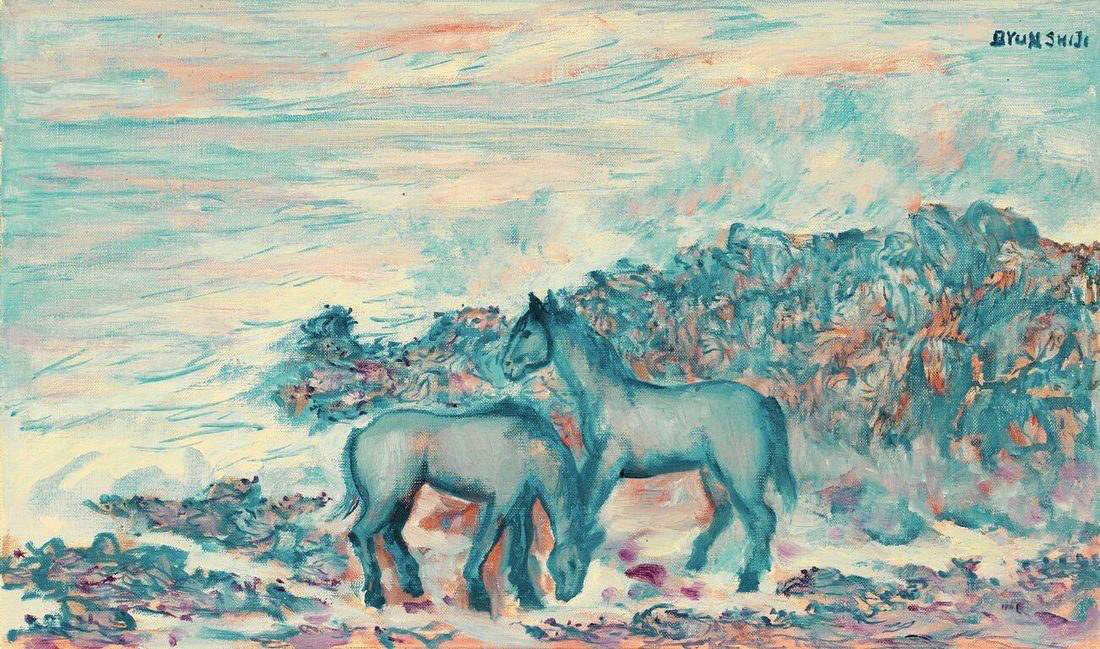
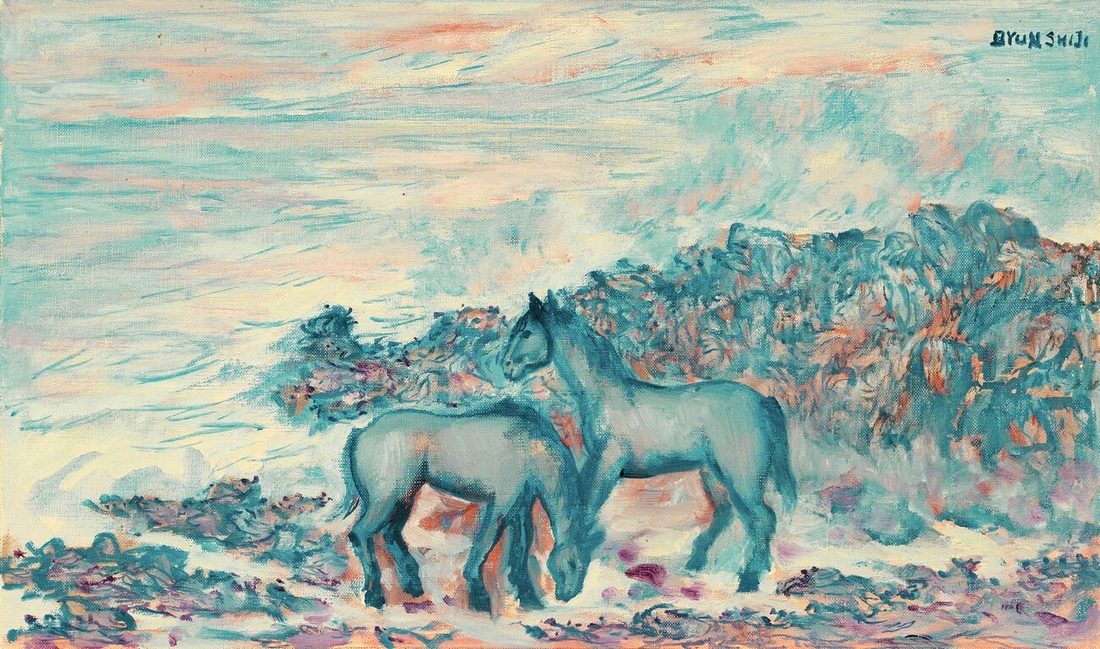
The ground in Jeju Ponies (1975) contains bluish tones alongside reddish and light marks. This early surface makes it difficult to think of fūdo through one colour alone. Colours connecting the animals to their surroundings differ, while the relationship of bodies placed on earth continues. A reading of milieu must be wider than a single colour name.
Time can be felt in weathered colour. But we cannot arrange a painter’s mind into a sequence in which dark means despair and light means recovery. The same colour may approach as heavy or light through its marks and intervals. The grass metaphor is useful not because it fixes an answer, but because it quietly opens a sense of weathered time within colour.
Ground Made Through Few Marks
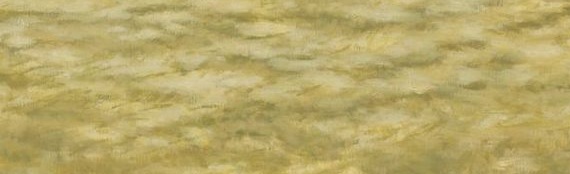
A detail of the lower area of Wild Dance reveals short marks recurring in related lengths and directions without becoming identical. Some are dark; others merge into the ground. Rather than counting all of them as grass leaves, we can observe their pictorial work in preventing the earth from becoming a smooth blank. Small traces establish the density of a broad area.
The direction of a trace alone does not establish that the brush travelled upwards from below. A finished line does not always reveal the sequence of its making. What we read now is not testimony reenacting the beginning of a stroke, but the feel of ground produced by marks together. Distinguishing a trace of movement from the actual action of the hand brings the analysis closer.
Sparing depiction does not refer only to how much has been omitted. Where a mark stops and what lies close to it matter. A stroke beside stone may read as grass, while a similar stroke in a broader area may suggest uneven ground. Concision is not a state of nothingness. It is a condition in which a few clues help one another make form.
Making Wind Felt Rather Than Measuring It
Short marks extending to one side can respond to the directions of nearby trees and birds. Their correspondence helps make invisible wind felt. But painted grass is not an anemometer. We cannot calculate an actual wind speed or exact direction from its inclination. Measuring nature and producing a pictorial sensation are connected but different activities.
Wind can be felt in more than one way. Broad rough marks in the sky create a large movement; brief traces underfoot touch a nearby surface. Seeing large and small responses together makes the picture’s air feel layered. This is not a ranking of plants by sensitivity, but a difference in sensation produced by pictorial scale.
The viewer’s attention moves through those layers: receding along the horizon, returning to the yard, descending from a bird’s wing to traces on earth. Wind becomes a relationship felt through this movement rather than the meaning of one sign. A small grass-like mark matters not because it replaces a great storm, but because it opens a place for wind nearby.
Speaking Carefully of Growing Again
The time of grass cannot be explained only as death in one season and resurrection the next spring. Grasses include annuals and perennials, with different ways of growing again. Oregon State University’s account of grass life cycles distinguishes continuation through seed from continued growth through living tissues. Even when the same green seems to return, the structure of time may differ.
This difference can also help us think about repetition in painting. The return of a similar motif is not the return of the same picture. Some lines continue while relationships change. Adding from an earlier painting differs from beginning the same subject anew. Several kinds of time may lie beneath the single name repetition.
Growing again must retain its conditions. Turning it into a promise that all life always recovers would erase the place of what has not returned. The small consolation of grass is not proof of immortality. It is the possibility that a place for growth remains here. Seeing that possibility begins with the ground and traces already before us.
A Place in Our Attention for the Small
The ontology of a tuft of grass is not a declaration that the small is superior to the large. It slightly changes an order of attention arranged by size. After mountain and sky, we look at the surface on which bodies stand. When that surface no longer remains mere background, the painting acquires another depth.
This depth does not come only from adding more stories. We can leave a short, uncertain trace as it is and notice the lightness beside it. Relationship can be felt without everything being explained. Broad dried-grass-coloured earth continues without erasing those small differences.
Birds are scattered in the sky. The eye returns to the ground. Beside a short mark, a light place remains.