Research/A Hundred Years of Wind/Ⅱ Figure & Being
Ⅱ Figure & Being · 30 / 100
Seated Female Figure
Clothed Bodies, the Nude and the Distance of Looking
여인좌상
First, Distinguish the Paintings
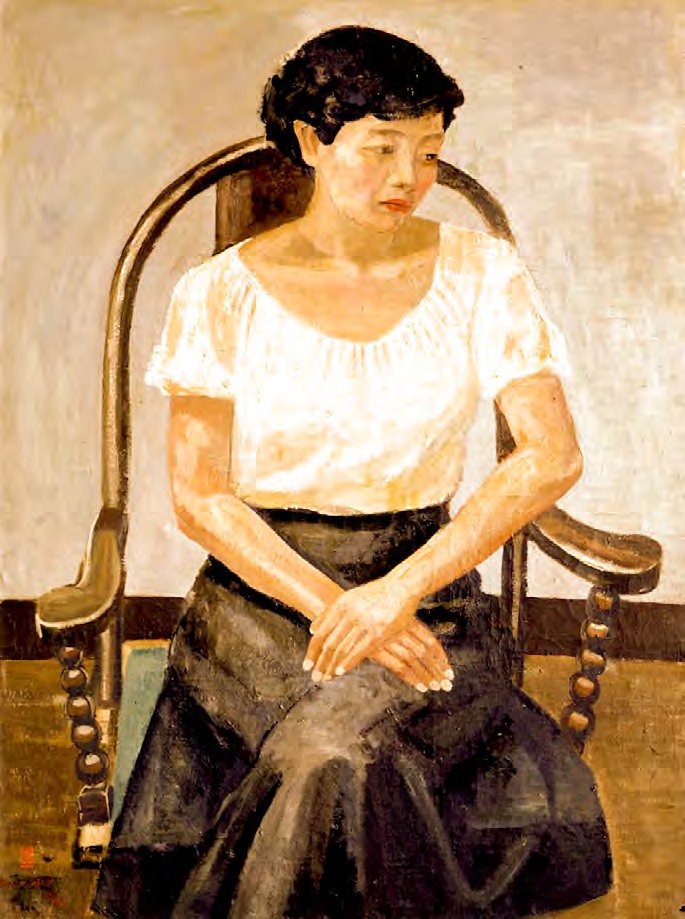
In Portrait of Nemo (1951), a woman sits wearing a white blouse and dark skirt. Her hands overlap near her knees, while a rounded wooden chair-back curves behind her shoulders. This is not a nude. Seated figure describes a pose, a distinction separate from whether the body is clothed. We need to begin without merging different works under the heading of a seated woman.
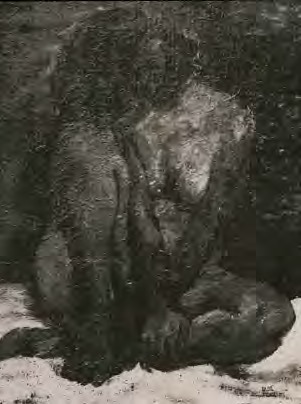
In the separate reproduction of Nude (1953), the body is folded much more deeply. The head is lowered and the bent legs are drawn close. The small preserved reproduction does not permit a detailed judgement of colour or skin texture, but the gathering direction of head and limbs is visible. Describing this as a woman seated on a chair facing forward would turn it into a different painting.
Seated Female Figure here names a theme concerning ways of painting a seated body, not a substitute identification for one particular work. The two paintings provide a focus for differences of pose and gaze. Before treating them as examples of the same painter’s Japanese-period portraiture, we attend to how differently their figures sit.
The Chair Is Support, Not Merely Background
In Portrait of Nemo, armrests extend on either side of the body. Details of the chair continue beside the dark skirt, and the curve of the back divides the light field around the head. The chair is more than an ornament lending dignity. It helps determine both where the body’s weight is held and how the picture’s width is organised.
Sitting does not cancel a body. Weight borne by feet and legs is redistributed through the seat, while arms find positions near knees or armrests. These relationships leave bodily work visible even in a still seated figure. Being still is different from having no forces at work.
Inwardness is not a quality automatically conferred by sitting. A standing person may reflect, and a seated person may be open to others. The sense of an interior created by the painting must be sought less in a pose alone than in relationships among gaze, hands, chair and surrounding space.
Where Two Hands Overlap
The arms descend from the white blouse and meet above the dark skirt. The fingers do not merge into a single mass; they remain as small light forms. Following the arms down from the face, the eye slows for a moment before the hands. Even before we name an emotion, the painting regulates the pace of looking.
Overlapping hands need not signify anxiety or submission. They may be waiting, resting or maintaining a pose. The possibilities are several, but not all readings are equally grounded. We must return to tension, placement and the direction of the arms. Interpretation gains force when it can return to a small visible form.
The gaze does not meet the viewer directly; it turns towards the right of the picture. This does not allow us to say that the eyes see nothing. Describing a visible direction differs from declaring an absent mind. The woman is visible to us, but her own act of looking is not thereby surrendered to us.
The Nude Is More Than the Absence of Clothing
In Nude, neck and shoulders, arms and bent legs gather more closely. The outline of a body folded inwards reaches us before that of a body spread outwards. One leg appears folded to the side, the other knee drawn higher. This folding establishes a route for the gaze different from a display of broadly exposed skin.
A lowered head does not establish that the model felt shame or rejected the painter’s gaze. The pose is depicted; the conversation through which it was chosen cannot be recovered from this reproduction alone. Respect for the body’s form also means not filling its psychology at will.
What we can read is visibility and concealment occurring within the same body. There is no clothing, yet not every part is exposed. The face may be obscured while the relationship of shoulder and legs remains specific. The folded body makes clear that the amount of exposure does not determine how much we know of a person.
The Viewer Also Has a Responsibility
In Ways of Seeing, John Berger examines conventions of the European nude in which a woman’s body is arranged for an assumed spectator’s gaze. The question concerns more than clothing or its absence: who is entitled to look, and whose presence is organised for that looking? It remains a useful question before Byun’s figures.
Yet an averted gaze alone cannot establish that the convention has been wholly overcome. A turned head, too, can form part of a composition made for a spectator. Rather than award the work a declaration of victory, we should ask how we are consuming this body. Are we treating a person who does not speak merely as material for our own feeling?
Respect does not require giving the figure a defiant expression. A quietly seated person has no obligation to prove herself to us. A gaze that does not return ours need not imply weakness or passivity. Viewing can be less a right to discover everything about a person than an act of limiting our authority before what is visible.
A Canvas Reduced to Attend to a Person
In an excerpt from his 2004 oral history published by the archive, Byun recalls reducing the canvas to suit the figure rather than filling space beside it with a table or vase. The opposite of decoration here is not indiscriminate emptiness. It is a decision about how much surrounding space keeps attention on the person he intended to paint.
The chair remains in Portrait of Nemo. To derive a rule that every object must be removed would miss the painting. The chair supports the body while making curves and verticals. The issue is not an unconditional reduction in the number of things, but the role each plays in how this person is seen.
Light and colour work within the same relationship. White blouse and dark skirt reveal each other, while flesh tones connect the direction of arms and hands between them. Colour cannot simply be assigned to decoration and line to essence. Outline and plane, light and dark together establish bodily weight. Line and colour are not the exclusive possessions of different cultures, but pictorial means working together here.
Avoiding a Shortcut from Woman to Old Man
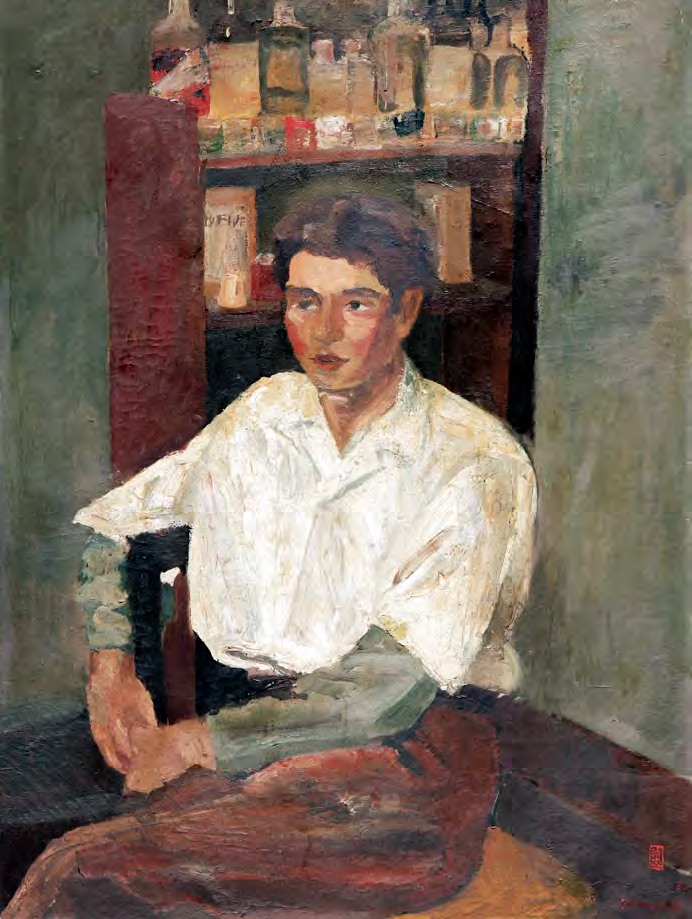
The preserved catalogue places Man (1950) beside Portrait of Nemo. Wearing a white shirt, the figure sits obliquely with both hands gathered low; a bookcase is visible behind. This seated figure makes clear that sitting and silence are not exclusively feminine qualities. A question of posture cannot be explained by gender alone.
We should also resist reading women from the Japanese period only as stages preparing the later Jeju old man. Bent bodies and averted gazes may be compared, but different persons and situations need not merge into one destiny. The woman is not sitting in order to become the old man. She already occupies her own place in the painting.
Continuity is more convincing when it does not erase difference. Even if an attention to bodily weight persists, the white blouse and the broad Jeju ground do different work. A body supported by a chair is not the same as one low against the earth. Attending to what continues and what changes enlarges our sense of a painter’s time.
Returning to the Seated Person
Reading a seated female figure does not end with confirming the acquisition of skill. We ask who was depicted, how she sits, and what is shown or left undisclosed. Yet we need not obtain every answer before we can look. An unknown life and a specific posture inhabit the same picture.
When the person is no longer merely a specimen of beauty or a vessel for the painter’s solitude, small particulars reappear: distinctions between fingers, folds of white cloth, the rounded line of a chair. Attention to another human being can begin in looking differently at these details, rather than in a grand philosophical declaration.
Two hands rest near the knees. The chair supports the body. The eyes have not turned towards us.