Research/Reading the Masters/Ⅲ Those Who Broke the Form
Ⅲ — Those Who Broke the Form · No. 13 / 50
Paul Cézanne — Still Life with Apples
세잔 — 〈사과가 있는 정물〉
1890s. Oil on canvas. One of Cézanne’s numerous still lifes with apples.
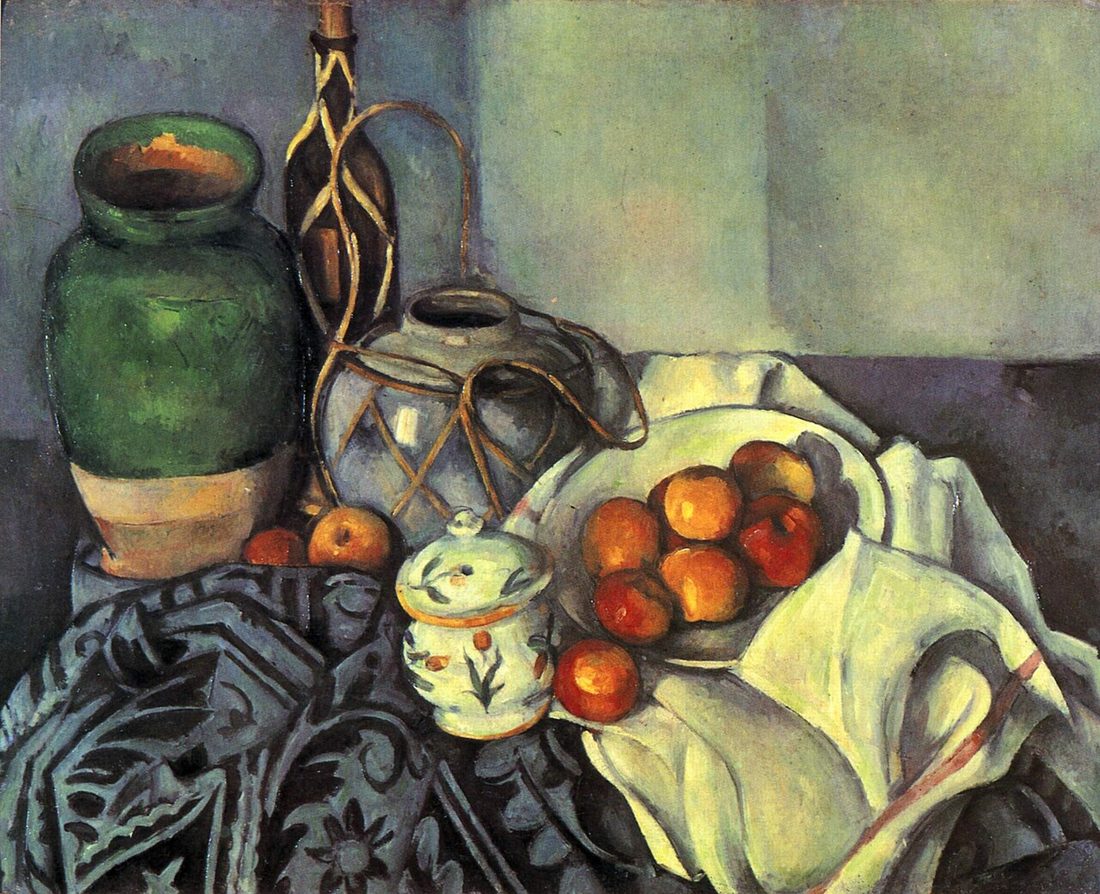

Apples rest on a table. They are round, but not perfect spheres. The dish tilts, the cloth folds, and the table edge refuses to obey a single direction.
Cézanne did not paint the apples as though seen in one glance. He looked repeatedly, shifted his position, and layered those moments within one image. Perspective trembles, yet the objects become more solid.
Each brushstroke forms a plane. Planes accumulate into apples, and apples accumulate into a standing pictorial structure. The work is closer to building than to copying. His still lifes prepared the ground on which Cubism could later appear.
Byun Shi-Ji’s line is not an outline either. It does not merely enclose the sea; it establishes the direction of wind. It preserves not the external shape of a person but the posture of endurance. As Cézanne’s strokes build the object, Byun’s lines build the force that resists collapse.
Both moved closer to the body of painting by reducing simple representation. Cézanne reached it through an apple; Byun through an island.
Apples decay. The apples in the painting remain on the table.
The interpretation is the author’s. No unverified statement has been presented as the artist’s own words.