Research/A Hundred Years of Wind/Ⅷ Philosophy of Art
Ⅷ Philosophy of Art · 100 / 100
The Road of the Wind
From the Last Essay, Back to the Painting
바람의 길
The Name “Last”
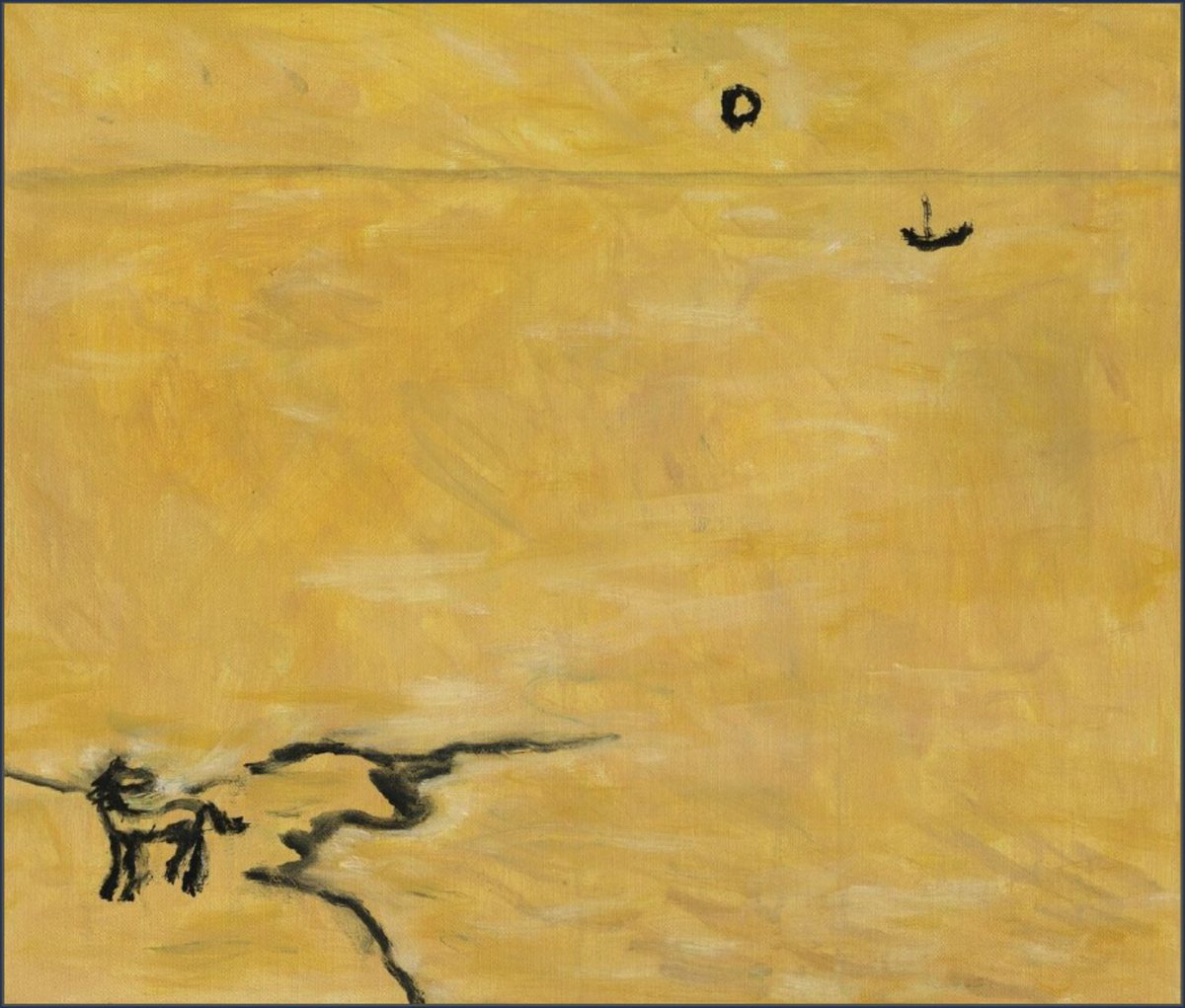
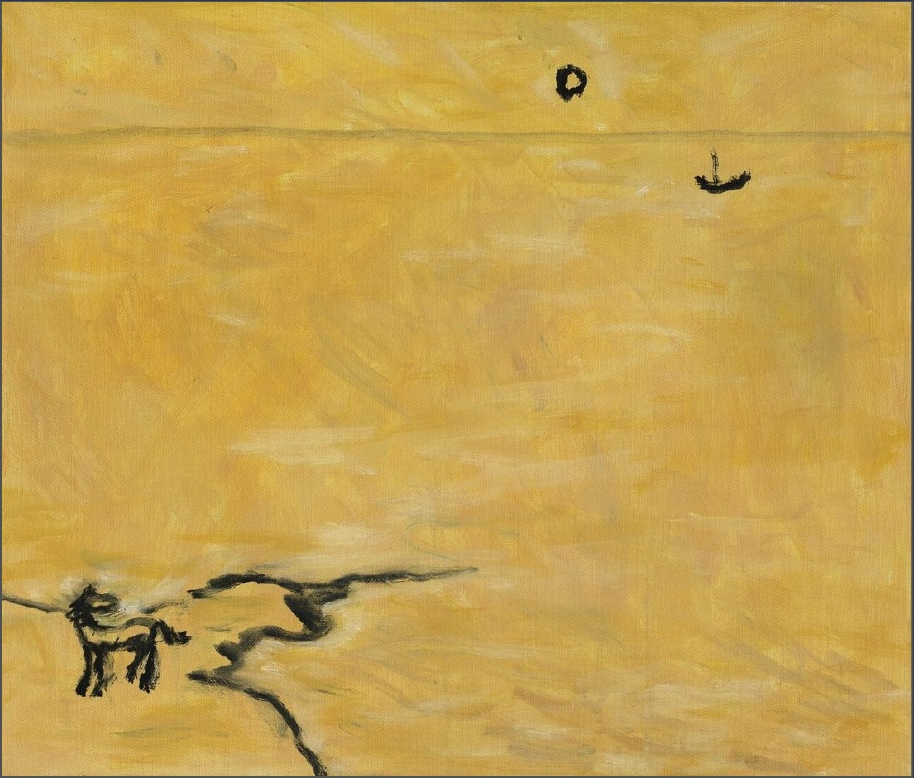
The Last Work is light.
A small sun and distant boat are above.
To one side below remain a small pony and dark forms.
Knowing the last painting is not witnessing the last brushstroke.
We do not know fully when the hand stopped or what it thought then.
We can still see the lines left behind.
Place one painting at the end of the book.
Do not try to explain a whole life.
Look once more at a small form.
What We Asked at the Start
At the start, we asked about wind.
How is something unseen felt?
We looked at tree and house, pony and human body.
Knowing that wind is involved still leaves things to see.
Where does the branch reach?
How far away is the house?
Asking about the unseen brings us back to what is visible.
Return to the first painting.
A gap missed before catches the eye.
Seeing can change without adding more meanings.
Within and Beyond a Hundred Years
Byun was born in 1926 and died in 2013.
The year 2026 marks the centenary of his birth.
Those hundred years include time in which he could no longer paint.
After him come people who look at the paintings.
People who check their names and make the writing readable.
Small tasks remain for the day after the commemoration.
The paintings did not survive by themselves.
Someone stored, moved and watched over them.
Do not hide those hands beneath the word “eternal”.
After Finishing
Byun spoke of working carefully towards a finish and completion.
He also spoke of losing a good effect by working on it further.
He was seeking the place to stop his brush.
After the painter finishes, the viewer still has something to do.
The hand’s ending is not the eye’s ending.
An open painting need not be unfinished.
This book can be finished too.
Revise the sentences and choose the last page.
That page does not decide where the painting ends.
The Brush That No Longer Moves
His brush no longer moves.
Without erasing that fact, we may still call the painting alive.
Someone else looks anew before it.
A small screen cannot convey all the original’s scale and surface.
Yet it can bring a distant person before the work.
Keep clear both what it cannot carry and the route it opens.
There was someone who painted young faces.
Someone who watched trees, read, and waited for paint to dry.
Leave those different days within the one name.
The Eye After a Hundred Essays
A hundred essays are not a hundred answers.
They are traces of different questions put to the paintings.
Words that explain too much can be pared back before the work.
Knowing fūdo, look again between house and body.
Knowing empty space, feel the distance to the boat.
Even without those words, one can come before the painting.
It is all right to close the book and forget the sentences.
One pony’s lowered head may remain.
Its posture may return on another day.
A Boat in Another Painting
Leave the boat in The Last Work for another painting.
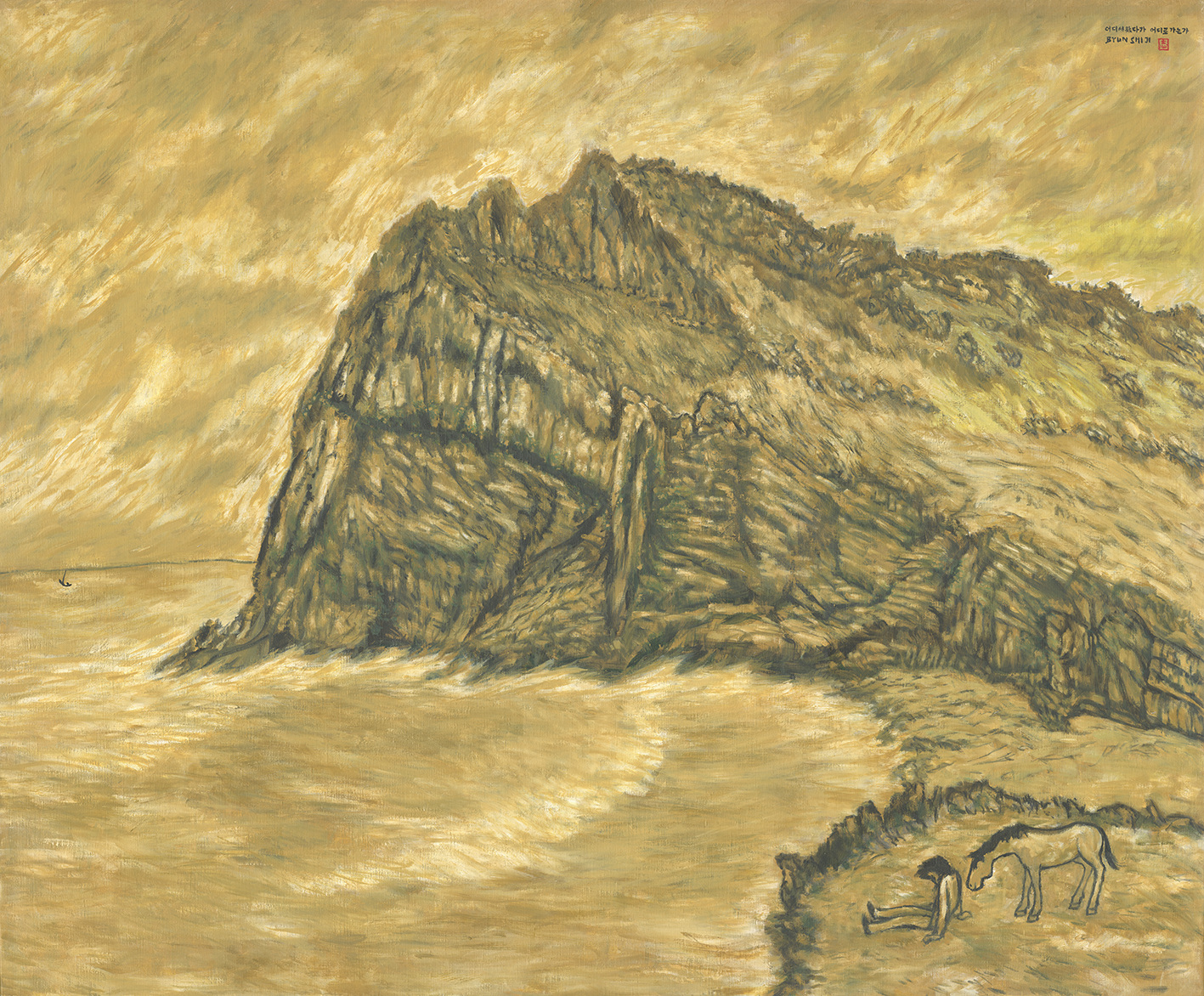
A great cliff rises in Where Do We Come From, and Where Are We Going?
Person and pony are low on the right; the boat is far away on the left.
Do not call the boat death or salvation first.
Cross the broad water with the eye to find it.
The distance travelled makes the person seem small.
The painting does not say fully where anything is going.
The title remains a question.
Between person and boat lies water not yet crossed.
The Road of the Wind
The cliff is large.
The water below it is wide.
At the right edge, a person sits with legs stretched out.
The pony lowers its head beside the person.
Light water comes close to the rocky edge where the two bodies rest.
The eye turns left.
On the distant water
is a single boat.