Research/Reading the Masters/Ⅳ Those Who Stood Before Nature
Ⅳ — Those Who Stood Before Nature · No. 19 / 50
Katsushika Hokusai — Under the Wave off Kanagawa
호쿠사이 — 〈가나가와 해변의 높은 파도 아래〉
c. 1830–1832. Polychrome woodblock print, approx. 25.7 × 37.9 cm. From Thirty-six Views of Mount Fuji.
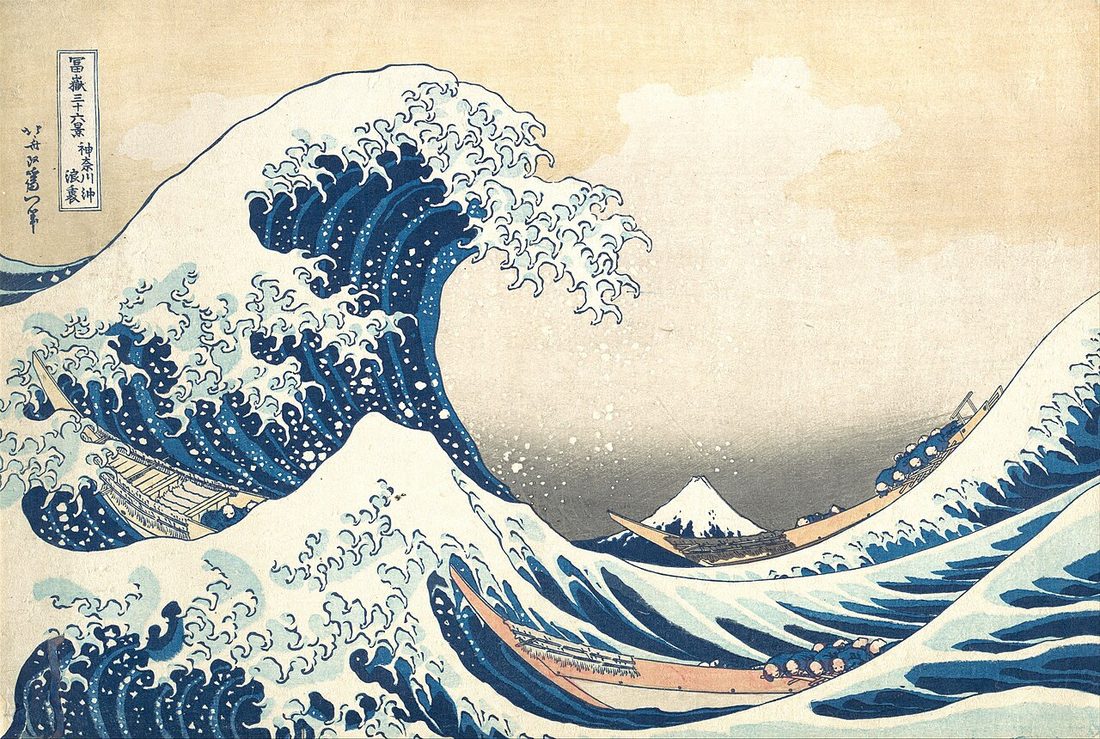

The wave has reached its highest point. White claws of foam descend toward the boats, while Mount Fuji remains small and still in the distance.
Hokusai placed the fastest and the slowest things in a single image: a wave about to collapse and a mountain that will stand for a thousand years. Between them are small boats and human bodies lowered close to the hulls.
The sharp contours of woodblock printing and the repeated curves freeze an instant. The wave has not yet struck, and the boats have not yet overturned. The moment before disaster continues indefinitely.
Byun Shi-Ji also painted the force of nature, but his force was wind rather than wave. A wave is visible; wind is not. He therefore painted bent trees, leaning figures, and thatched houses pressed low. He left not the wind itself but the marks of its passage.
Hokusai’s fishermen and Byun’s old man adopt the same posture. They do not attempt to defeat the force before them. They lower themselves, accept its direction, and survive. Bending is not defeat but a posture of life.
For two centuries, the wave has still not fallen.
The interpretation is the author’s. No unverified statement has been presented as the artist’s own words.