Research/Reading the Masters/Ⅰ Those Who Held the Light
Ⅰ — Those Who Held the Light · No. 01 / 50
Vincent van Gogh — The Starry Night
고흐 — 〈별이 빛나는 밤〉
1889. Oil on canvas, 73.7 × 92.1 cm. The Museum of Modern Art, New York.
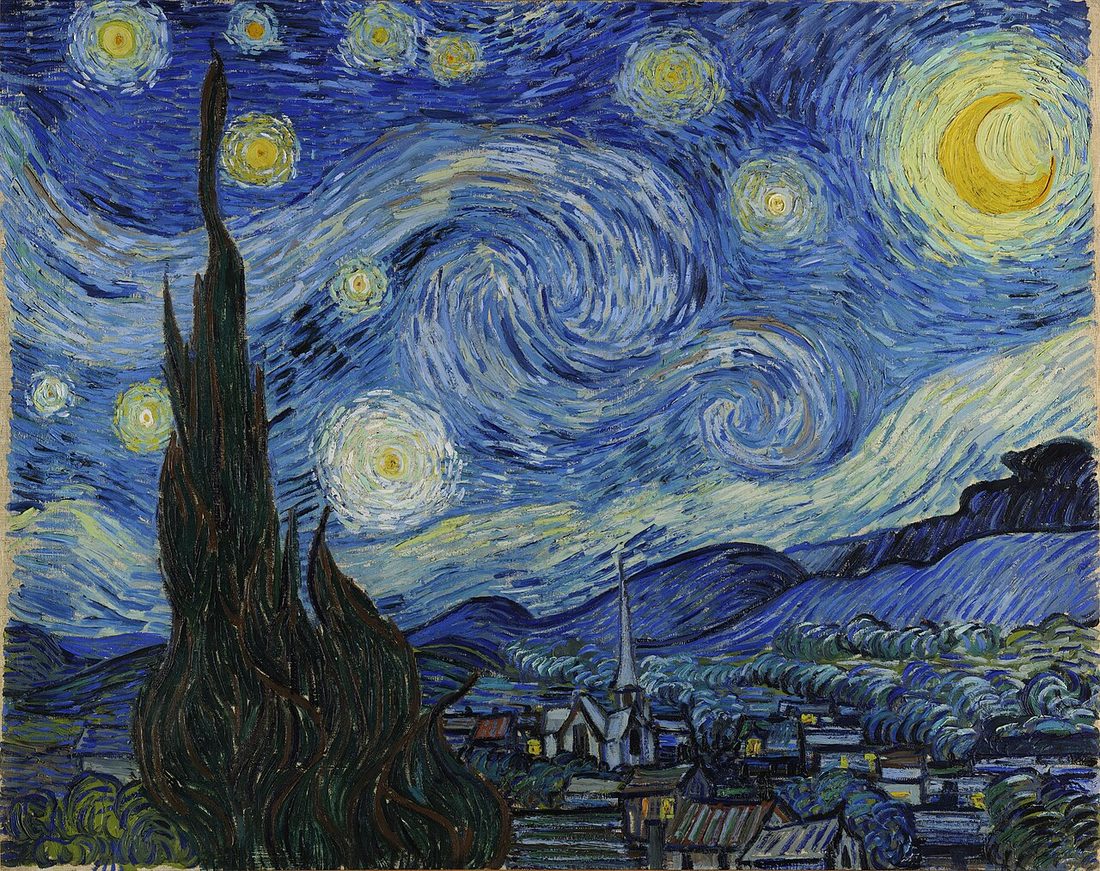

The sky bends. The stars do not remain still; they turn in spirals. Van Gogh did not paint the night so much as a mind unable to sleep.
It was the sky beyond the window of the asylum at Saint-Rémy. For someone confined, the sky is no longer mere scenery. It becomes the outside seen from a place one cannot leave, the depth of a world one cannot reach. Small lights glow in the village below. They mean that people are there—and that he is not among them.
The cypress at the left is rooted in the earth yet reaches toward the sky. It cannot rise without twisting. Byun Shi-Ji’s trees and lines do the same. In the winds of Jeju, what stands rigidly is easily broken. The line survives by bending. Van Gogh’s line drives inner turbulence outward; Byun’s line receives the outer wind into the body.
Their vortices resemble each other, but they move in different directions. Van Gogh’s night is hot and rises. Byun Shi-Ji’s wind is dry and presses low across the land. One reached toward the sky; the other remained with the earth. Both searched for a way to endure through painting.
We too readily call a person who feels too deeply mad. Perhaps the world was simply too beautiful to bear. Endurance is not victory. It is remaining until morning.
The stars are still turning.
The interpretation is the author’s. No unverified statement has been presented as the artist’s own words.