화면 앞에서Before the painting
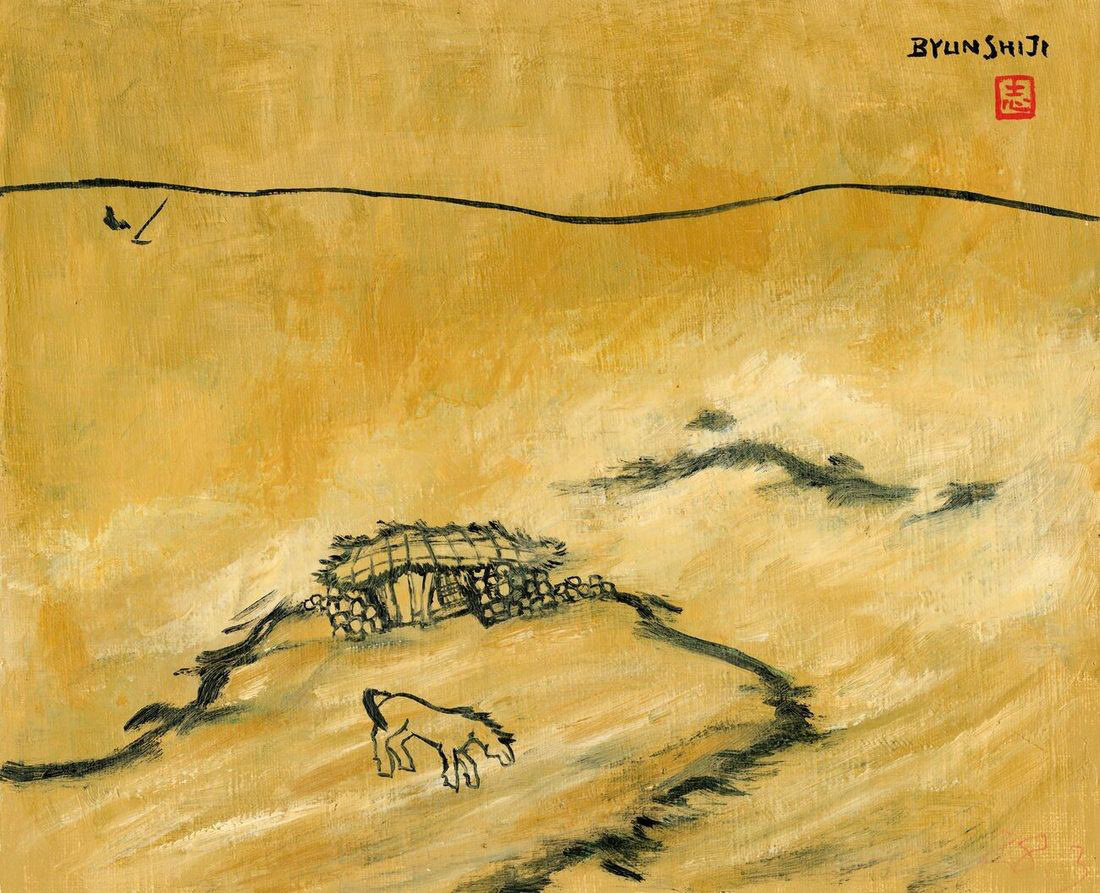
밝아진 하늘 아래 낮은 초가와 돌담, 숙인 말이 남아 있다. 태풍의 순간보다 지나간 힘이 지붕과 땅, 몸에 남긴 압력이 화면을 지배한다.Beneath a clearing sky, a low thatched house, stone wall and bowed horse remain; the painting is governed by the pressure the storm has left behind.
검증 메모: 연도는 현재 아카이브의 1990년 표기를 유지했습니다. 해설은 실제 화면의 ‘폭풍 이후’ 장면에 맞추었습니다.Verification note: the current archive date of 1990 is retained. The interpretation follows the visible post-storm scene.
이 그림은 태풍의 극적인 한복판보다 폭풍이 지나간 뒤를 보여준다. 하늘은 열렸지만 초가의 지붕은 눌려 있고 말은 고개를 숙인 채 땅 가까이에 남는다.
재난은 지나갔다고 즉시 끝나지 않는다. 힘은 사라진 뒤에도 집의 형태와 몸의 자세, 땅의 결에 기억으로 남는다.
변시지는 사건을 과장하지 않고 남겨진 형상을 통해 폭풍의 크기를 말한다. 견딤은 아무 일도 없었던 듯 곧게 돌아오는 일이 아니라, 바뀐 자세로 다시 하루를 시작하는 일이다.
The painting presents not the spectacular centre of the typhoon but its aftermath. The sky has opened, while roof, earth and bowed horse still carry pressure.
Disaster does not end when the wind stops. It remains as altered form and posture. Endurance means beginning again without pretending that nothing happened.
폭풍은 지나가도 사라지지 않는다. 집과 몸이 달라진 자세로 그 힘을 기억한다.The storm passes but does not vanish; house and body remember it through altered posture.
작품 이미지와 기본 식별 정보: Image and base identification: byunshiji.org / works / 018
이 글의 철학적 문장은 작품에서 출발한 비평적 해석이며 작가의 직접 발언으로 제시하지 않습니다.Philosophical statements are critical interpretations grounded in the work, not presented as direct quotations from the artist.
이 글의 철학적 문장은 작품에서 출발한 비평적 해석이며 작가의 직접 발언으로 제시하지 않습니다.Philosophical statements are critical interpretations grounded in the work, not presented as direct quotations from the artist.