화면 앞에서Before the painting
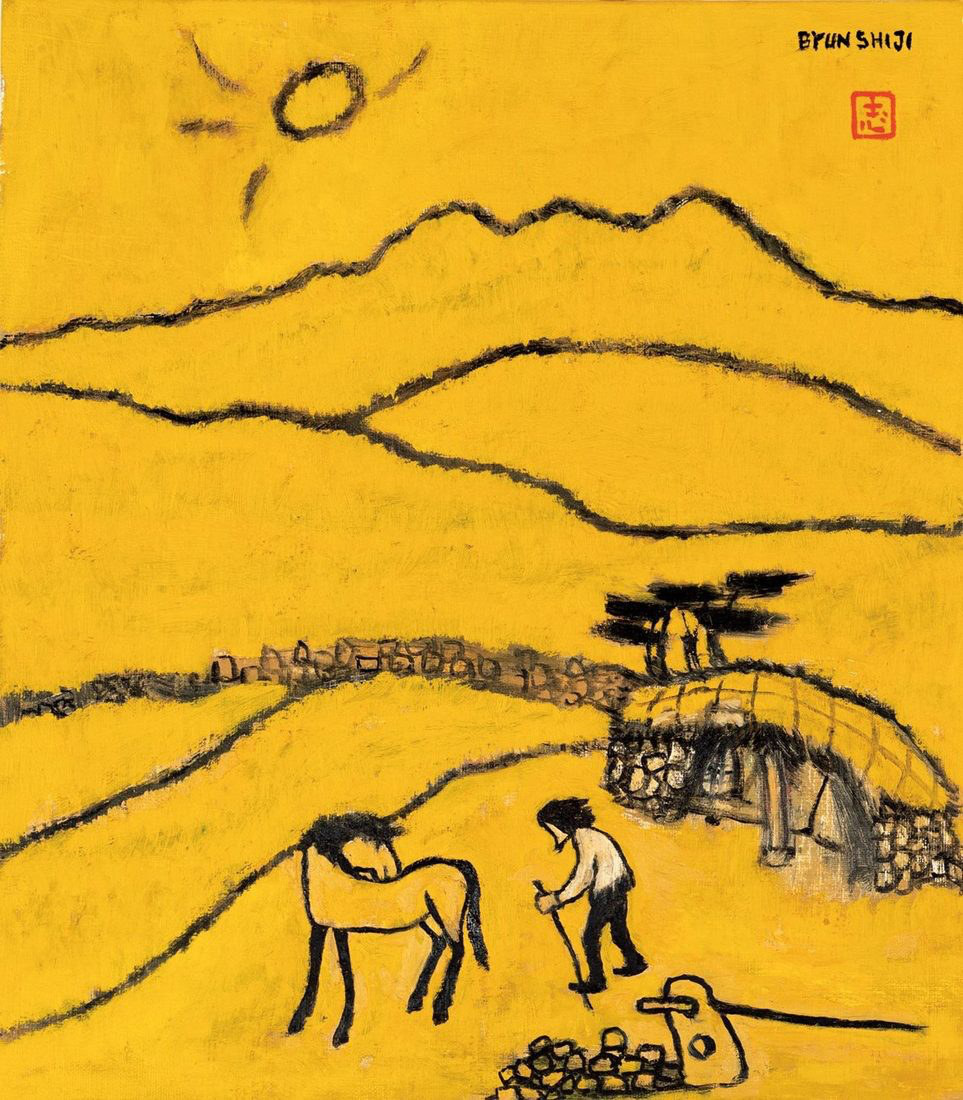
둥근 해와 몇 개의 검은 산줄기 아래 초가와 돌담, 고개 숙인 말과 등이 굽은 사람이 놓인다. 한라산은 단순한 선으로 줄었지만 화면 전체의 조건이 된다.Beneath a ring-like sun and a few black mountain lines stand a thatched house, stone wall, bowed horse and stooped person; Hallasan becomes the condition of the whole scene.
산의 봉우리와 골짜기는 세밀하게 재현되지 않는다. 그러나 한라산은 모든 존재의 뒤와 아래에 놓인 보이지 않는 중심으로 남는다.
초가는 낮고, 말은 목을 숙이며, 사람은 허리를 굽힌다. 이 자세들은 같은 풍토에서 오래 살아온 존재들이 얻은 공통의 몸짓이다.
풍경은 사람 뒤에 놓인 배경이 아니다. 바람과 산이 사람의 등, 말의 목, 집의 지붕 안으로 들어와 남긴 살아온 자세다.
Hallasan is compressed into a few lines, yet remains the underlying centre of the island.
The lowered house, bowed horse and stooped person share postures acquired through the same fūdo. Landscape is what a place leaves in bodies after life has been lived there.
풍경은 사람 뒤에 펼쳐진 배경이 아니라, 그곳에서 오래 살아온 몸에 남은 자세다.Landscape is not a background, but the posture left in a body by a life lived within a place.
작품 이미지와 기본 식별 정보: Image and base identification: byunshiji.org / works / 009
이 글의 철학적 문장은 작품에서 출발한 비평적 해석이며 작가의 직접 발언으로 제시하지 않습니다.Philosophical statements are critical interpretations grounded in the work, not presented as direct quotations from the artist.
이 글의 철학적 문장은 작품에서 출발한 비평적 해석이며 작가의 직접 발언으로 제시하지 않습니다.Philosophical statements are critical interpretations grounded in the work, not presented as direct quotations from the artist.