CENTRAL READING
Crows on the Stone Wall
The mound of stone becomes the form of people who lost speech while waiting for those who did not return.
PERIOD & MOTIFS
Middle Jeju I, 1980–1987
Ieodo, dried-grass colour, storms, wavering horizons and the black sun.
horsecrowfigurereturn
LIFE & TIME
Chronological coordinates
- 1980Crows on the Stone Wall was created and registered in the official archive.
- REVIEWMiddle Jeju I, 1980–1987 · Ieodo, dried-grass colour, storms, wavering horizons and the black sun.
THE PAINTER’S VOICE
Related oral history
- Session 5Formation of the Jeju Style
- Session 6Jeju’s Primal Landscape and Folklore
- Session 7Imagined Landscape and Dried-Grass Colour
RESEARCH
Research paths
- RESEARCHPainter and FūdoOpen source →
- RESEARCHA Century of WindOpen source →
- RESEARCHOral-History CommentaryOpen source →
EVIDENCE
Evidence and interpretation
| Grade | Claim | Basis |
|---|---|---|
| A | 1980 · Crows on the Stone Wall | Title, year and image in the official 100 Works archive. |
| B | Visible form and recurring motifs | Direct comparison of image, artwork text and related works. |
| B | Middle Jeju I, 1980–1987 | Formal comparison within the reviewed chronological group. |
| C | Links to life, testimony and research | Curatorial relations proposed for research navigation. |
Related Works
Works to view together
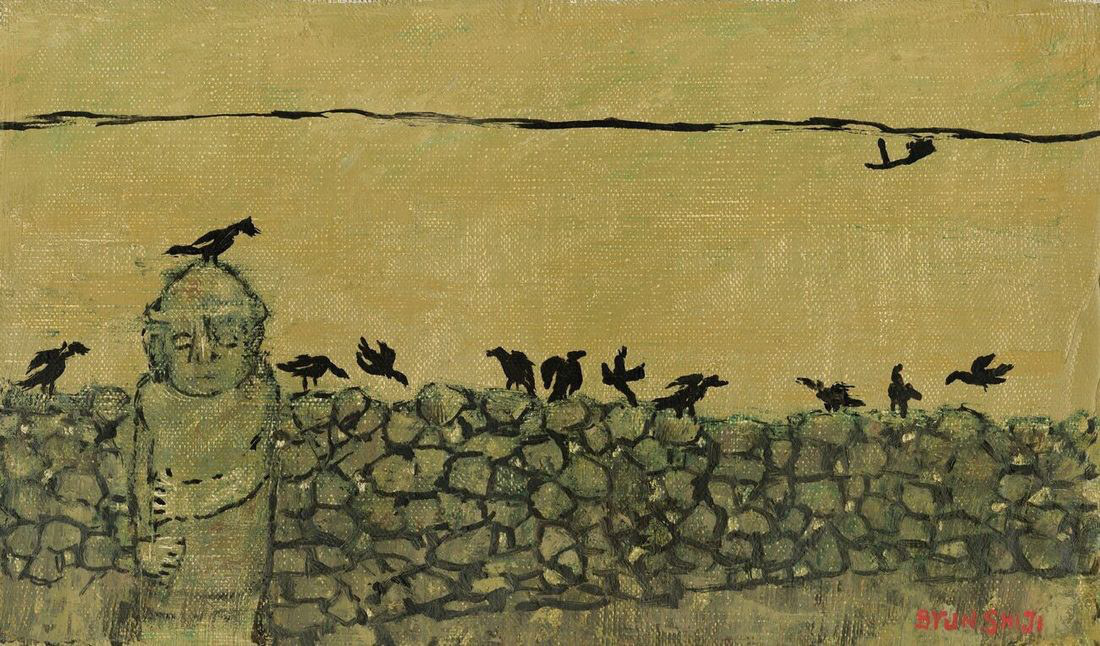
FŪDO 059 · 1981
Dol Hareubang and Crows
The stone grandfather waits by not moving and illuminates the road home by not speaking.
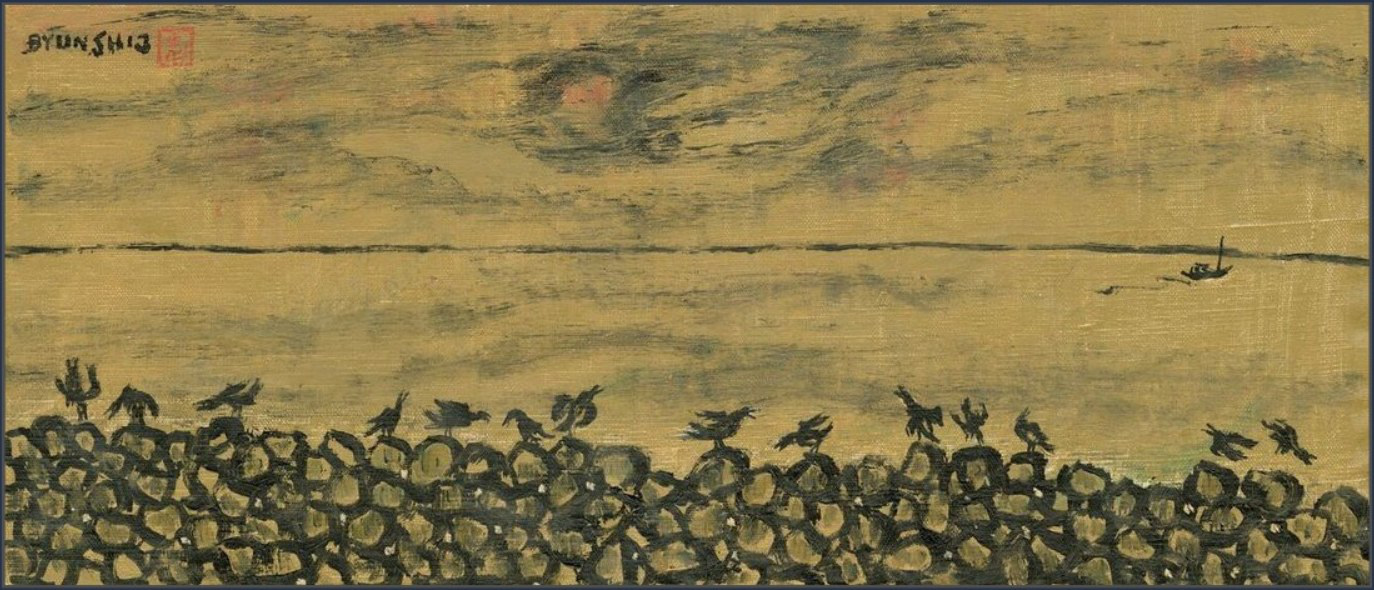
FŪDO 057 · 1983
Crows on the Stone Wall
Perhaps waiting is the act of those who remain looking toward the sea together.
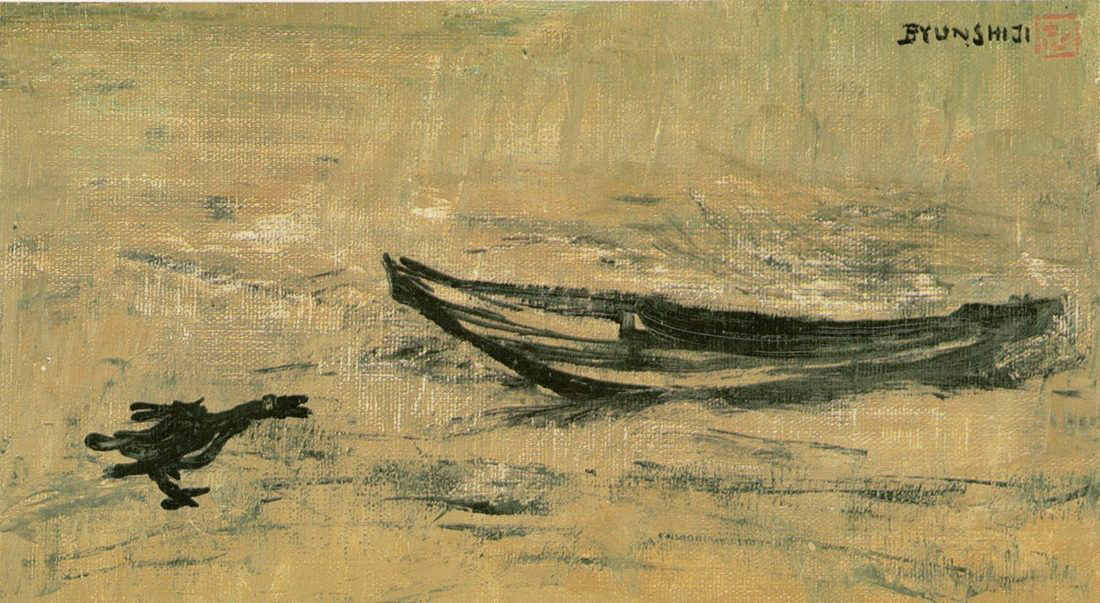
FŪDO 063 · 1980
Ieodo
The empty boat remembers those who could not return; Ieodo remembers the names that could never be called.
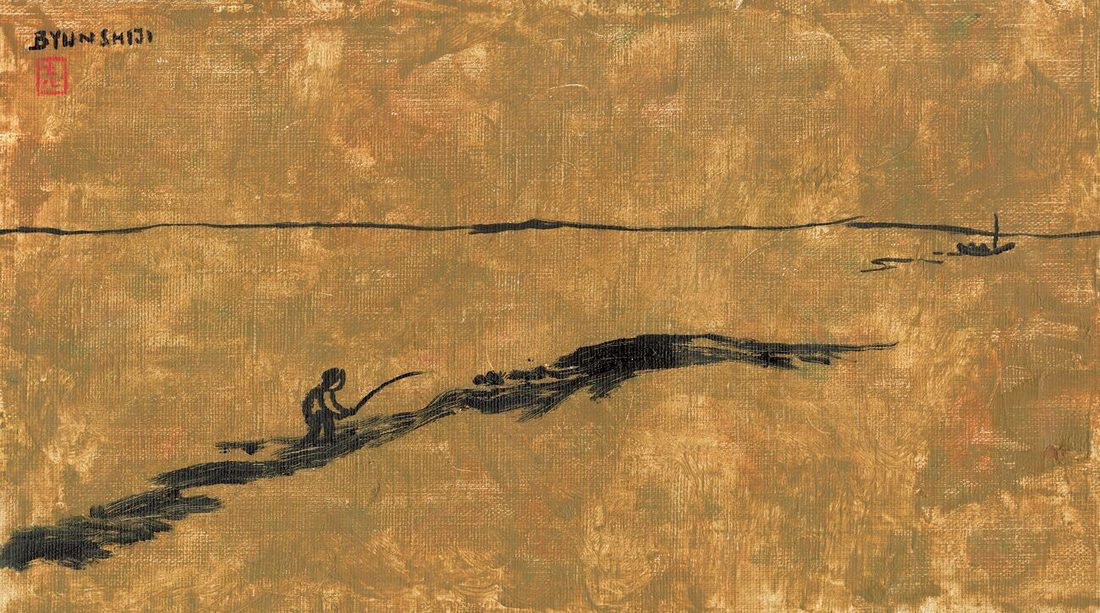
FŪDO 083 · 1981
A Long, Long Longing
Waiting is not time spent obtaining something, but keeping the heart directed toward what does not come.
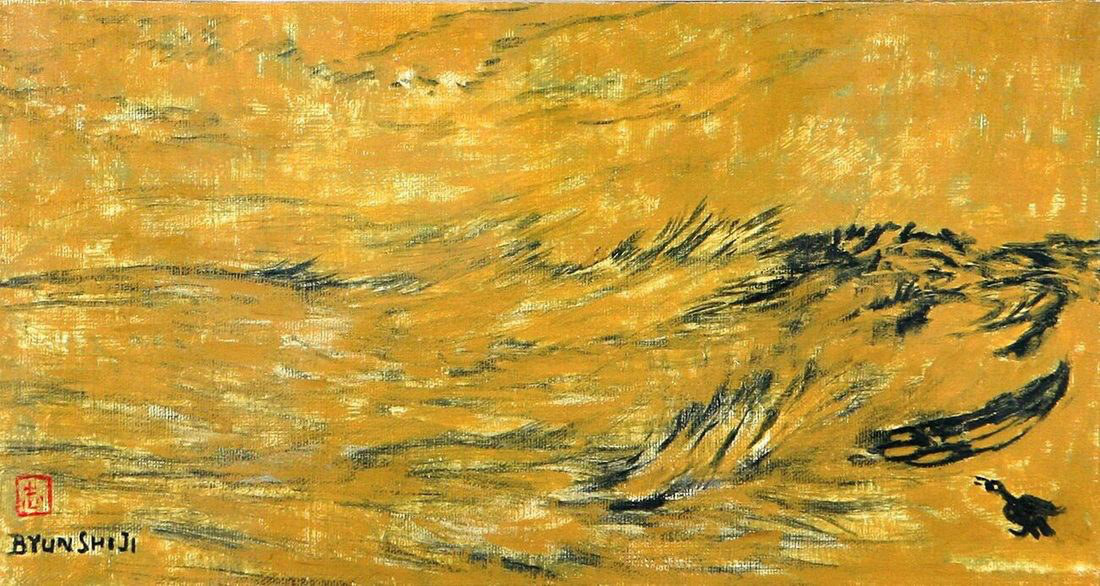
FŪDO 064 · 1987
Ieodo
The empty boat is evidence of the one who did not return, and the crow's cry testifies to that absence.
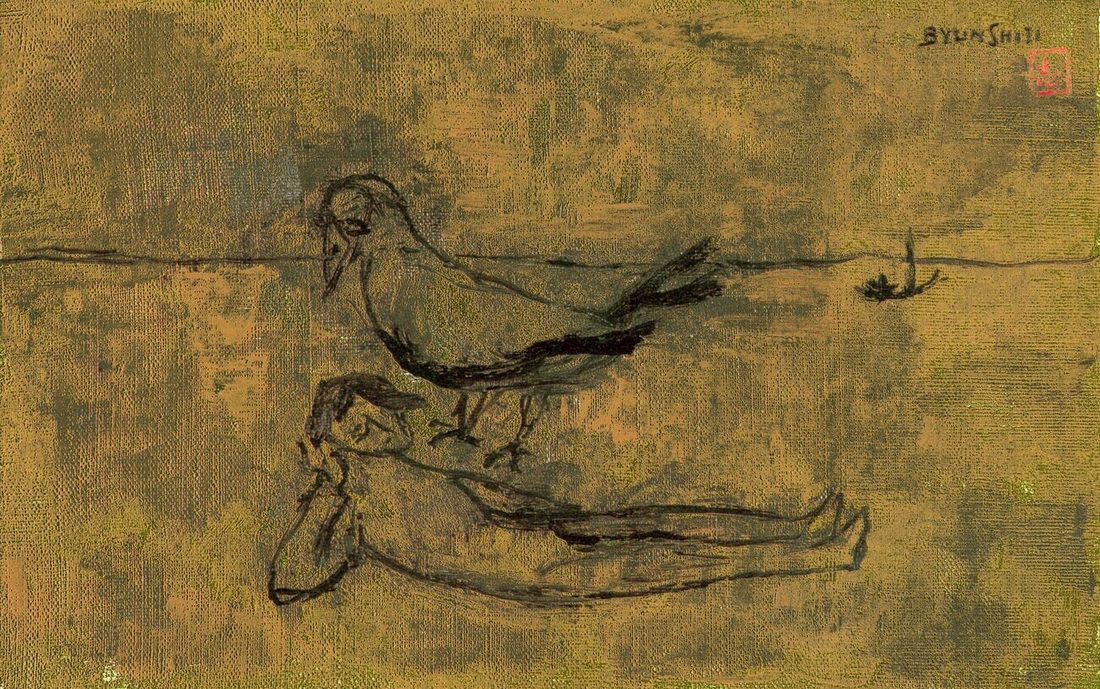
FŪDO 060 · 1979
The Crow and I
Knowing one another's solitude without speech is the dialogue between the crow and me.